Dakota James Simmons-Valier, IL

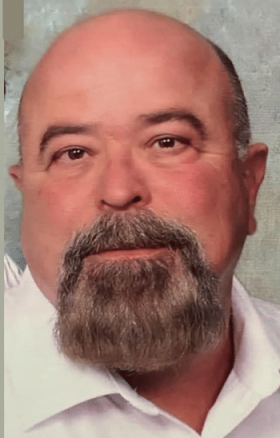
Dakota James Simmons, 16, of Valier, passed away on Saturday December 20, 2025 from injuries sustained in an automobile accident.

He was born on May 20, 2009 in Ocean Springs, MS to Bobby James and Tamara Dawne (Bean) Simmons. He is survived by his mother and father Bobby and Tamara Simmons of Valier; siblings Aerial (Nick) Holliman of Mississippi, Dystany (Dylan) Cook of Mississippi and Landen Simmons of North Dakota. He loved working on cars especially his corvette and also loved racing go karts.

He was dual enrolled at John A Logan and Rend Lake Community College working towards his degree in HVAC to one day open his own business.

In lieu of flowers the family is requesting monetary donations to finish restoring his 1985 corvette he loved dearly, envelopes will be available at the funeral home.

Funeral services will be on Sunday December 28, 2025 at 3:00 PM at the Brayfield-Gilbert Funeral Home in Sesser with Brother Larry Cook officiating. Visitation will be on Sunday from 12:00 PM until the time of the service at 3:00 PM.

For more information go to our website www.gilbertfuneralhomes.com

Blaine Baseden – Benton, IL

Blaine Joseph Baseden, age 17, of Benton, passed away Saturday, December 20, 2025, due to injuries sustained in a motor vehicle accident.

Funeral Services will be held at 2:00 p.m. Saturday, December 27, 2025, at the Benton Civic Center, 414 West Hudelson Street, Benton, Illinois, with Pastor Brian Williams officiating. Visitation will be from 11:00 a.m. to 2:00 p.m. Saturday at the Benton Civic Center.

The Leffler Funeral Home of Benton is in charge of the arrangements.

Blaine was born on October 27, 2008, in Mt. Vernon, Illinois; the son of Jeremy Baseden and Melinda Johnson.

He was a Junior at Benton Consolidated High School.

Blaine enjoyed the outdoors, especially hunting, fishing, and hiking. He also liked hanging out with his friends and spending time with his family.

Surviving is his loving mother Melinda Johnson of Marion, Illinois, his loving father Jeremy Baseden of Benton, Illinois; his sister Bayley Ann Baseden of Vergennes, Illinois; grandparents: Judy Williams of Simpson, Illinois, Keith Johnson of Auburn, Illinois, Bill Baseden of DeSoto, Illinois; great-grandmother Martha Fielding of Auburn, Illinois; aunts and uncles including: Josh Johnson and wife Jennifer of Wilmington, North Carolina, Miranda Johnson of Milan, Tennessee, Kevin Baseden and wife Dakota of Eldorado, Illinois, Bobby Baseden and wife Evonne of DeSoto, Illinois, Jessica Duvall and husband Todd of DeSoto, Illinois; and several cousins and friends.

He was preceded in death by his paternal grandmother Mary Baseden, maternal great-grandfather Charlie Johnson, maternal step-great-grandfather Robert Fielding, paternal great grandparents Clarence and Betty Baseden, maternal great-grandmother Patsy Kelly, paternal great-grandmother Mary Rodriguez.

Memorial contributions may be made to the Leffler Funeral Home to assist the family with expenses; and will be accepted at the service on Saturday.

To give condolences online to the family, or to share memories of Blaine, visit www.lpfuneralhome.com.

Please pray for the families of those involved in this tragic accident.

Philip Louis Steinmetz-Christopher, IL

Philip Louis Steinmetz, 81 of Christopher, passed away at 10:50 pm on December 17, 2025 at his home.

He was born on December 9, 1944 in Herrin, Illinois to George and Lucille (Stanley) Steinmetz. He married Linda Alldredge on August 8, 1964. They had three children together. Philip (Carla) Steinmetz of Christopher, Kerry Steinmetz of Seattle, Washington and Kendra (Denise Minor) Steinmetz of Logan. They all still survive. He is also survived by his brother Bud (Karen) Steinmetz of Christopher, sisters Alice (Howard) Grant of Herrin, Betty Kronsell of Marion and sister-in-law Judy Steinmetz of West Frankfort. Along with several nieces, nephews and grandchildren Brittany Hammonds, Derick (Morgan) Hammonds, Sammy (Zack) Nave and three great granddaughters Aurora Hammonds, Tatum and Hallie Nave.

Mr. Steinmetz was the proud owner of Steinmetz Construction for over 50 years.

He was preceded in death by his parents George and Lucille Steinmetz, partner Carolyn Neafus, brothers George Steinmetz, Charles Steinmetz, Jack Steinmetz, sister Donna Fox, nephew Daryll Fox and niece Stacey Fitch. Also surviving are Carolyn’s daughter Susan (Matt) Sursa and their children Lydia (Bo) Minor, Nick (Lainey) Sursa, Briana Sursa (Dacota Lorett) and their children Coraline and Atlas.

Funeral services will be held on Saturday December 27, 2025 at 1:00 PM at the Gilbert Funeral Home in Christopher with Brother Larry Cook officiating. Visitation will be on Saturday from 11:00 AM until the time of the service at 1:00 PM at the funeral home. Burial will be at Herrin City Cemetery.

For more information go to our website www.gilbertfuneralhomes.com

“Christmas ended that night…” – Remembering the lives lost and lives forever changed on the 74th Anniversary of the Orient 2 Mine disaster

(NOTE: This story was originally written in 2001, on the 50th anniversary of Orient 2 mine disaster that claimed the lives of 119 miners. Some of the people interviewed for this story – people who lost loved ones in this horrific mine explosion — have since passed on. Regardless if it’s the 50th anniversary or the 74th anniversary this tragedy needs to be remembered annually, simply because of the impact it had on Franklin County and all of Southern Illinois. Many new mining laws were implemented following the Orient 2 explosion, laws that subsequently saved the lives of countless miners. JM)

By Jim Muir
Christmas traditionally is a time for wide-eyed children, exchanging gifts and festive family get-togethers. For many, though, it also is a time that serves as a grim reminder of the worst tragedy in the history of Franklin County.

On Friday, Dec. 21, 1951, at about 7:35 p.m. a violent explosion ripped through Orient 2 Mine, located near West Frankfort, claiming the lives of 119 coal miners. The tragedy occurred on the last shift prior to a scheduled Christmas shutdown.  News of the tragedy spread quickly from town to town and hundreds of people converged on the mine to check on loved ones and friends.

Rescue workers are pictured with one of the 119 miners killed on Dec. 21, 1951 in the Orient 2 explosion.

Rescue workers are pictured with one of the 119 miners killed on Dec. 21, 1951 in the Orient 2 explosion.

A basketball game was under way at Central Junior High School in West Frankfort, when the public address announcer asked that Dr. Barnett report to Orient 2 Mine, No. 4 Portal, because “there had been a catastrophe.”  There were about 2,000 people at the game, and nearly half of them left with Dr. Barnett.  News of the tragedy and massive loss of life drew nationwide attention. Both Time Magazine and Life Magazine featured accounts of the explosion and newspapers from throughout the country sent reporters to Franklin County to cover the holiday tragedy. Gov. Adlai Stevenson was at the mine the following day along with volunteers from the Red Cross and Salvation Army.  Those who arrived at the Orient 2 Mine immediately after reports of the explosion surfaced had no way of knowing that they would be a part of history and folklore that would be handed down from family to family for decades to come.

A Christmas  Miracle 

Rescue workers began entering the mine within hours of the explosion, clearing gas and searching for survivors.   What they met, however, was the grim reminder about the perils of mining coal and the force of methane-fed coal mine explosions. Locomotives weighing 10 tons were tossed about, timbers a foot thick were snapped like twigs and railroad ties were torn from beneath the rails. Rescue workers began recovering bodies of the 120 missing men shortly after midnight on Dec. 22.   As the hours passed, and body after body was recovered from the mine, it became apparent that it would take a miracle for anybody to survive the explosion and the gas and smoke that resulted.  In the early morning hours of Christmas Eve — 56 hours after the explosion — that miracle happened.

Benton resident Cecil Sanders was found on top of a “fall” barely clinging to life. Authorities theorized that Sanders, by climbing on top of the rock fall, miraculously found a pocket of air that sustained him until rescue workers arrived.  Sanders told authorities later that he was with a group of five men (the other four died) when they actually heard the explosion. He said the men tried to get out of the mine but were driven back by smoke and gas. Sander said later he had resigned himself to the fact that he was going to die, even scribbling a note to his wife and children on the back of a cough drop box. “May the good Lord bless and keep you, Dear wife and kids,” Sanders wrote. “Meet me in Heaven.”

Sanders, who died only a few years ago, reported in a book, “Our Christmas Disaster,” that rescue workers were amazed that he survived.

“My God, there’s a man alive,” Sanders later recalled were the first words he heard as he slipped in and out of consciousness. “They didn’t seem to think it was true. When they got to me I couldn’t tell who they were because they all had on gas masks. Rescue workers came back in a few minutes with a stretcher, gave me oxygen and carried me out of the mine. There’s no question it was a miracle.”

A Christmas  Never Forgotten  

Rescue workers and funeral directors were faced with a grim task during the 1951 Christmas holiday season.  Something had to be done with the scores of bodies that were brought up from the mine. And funeral homes throughout Franklin County — where 99 of the 119 fatally injured miners lived — would have to conduct multiple funerals; in some instances, six or eight per day.  A temporary morgue was set up at Central Junior High School where row after row of bodies lined the gymnasium floor. Brattice cloth, normally used to direct the flow of air in coal mine entries, covered the bodies.  The usual joyous Christmas season turned into a bleak pilgrimage for families from throughout Southern Illinois as they faced the task of identifying the charred remains of the miners. The last body was removed from the mine on Christmas night, completing the work of the rescue and recovery. In all, 252 men were underground at Orient 2 when the explosion took place — 119 died and 133 miners in unaffected areas escaped unhurt.

‘Christmas ended  that night …’     

Nearly every person in Franklin County was affected, either directly or indirectly, by the disaster. For some of those who lost loved ones in the Orient 2 explosion, the events of that Christmas are just as vivid in 2001 as they were in 1951.   Perhaps no story evolved from the tragedy that was more poignant than that of Geneva (Hines) Smith, the 26-year-old mother of two small children, who lost her husband, Robert “Rink” Hines in the explosion.  Smith, who later remarried, still brushes away a tear when she recalls the last words of her young husband before he left for work on that fateful Friday afternoon.

“He held our daughter Joann, she was 3 months old, and he put his face against hers and he said, ‘she looks just like me … doesn’t she?” Smith recalled. “Only a few hours later his sister came to the door and said there had been an explosion … and then we learned later that he’d been killed. The last thing I remember was how happy he was holding his daughter.”

Smith said a cruel irony involving the funeral also played out after her husband’s death.

“There was so many funerals that they had them early in the morning and all day until in the evening,” Smith remembered. “The only time we could have his funeral was at 8 p.m. on Christmas Eve. That was our fifth wedding anniversary and we got married at 8 p.m. … I’ll never forget that.”

Lyle Eubanks, of Mulkeytown, remembers distinctly his last conversation with his father Clarence, prior to the elder Eubank’s departure for work.

“He walked into the kitchen and got his bucket and then walked back into the living room and sat down on the couch,” Eubanks said. “He talked about it being the last shift prior to the Christmas shutdown and said if he didn’t need the money so bad he wouldn’t go to work that night — that’s the last time I talked to him.”

Eubanks said he identified his father’s body at the morgue.

“There was just row after row of bodies and they were covered with brattice cloth,” he recalled. “You just can’t imagine how horrible of a scene it was. I’ll never, ever forget what that looked like.”

Eubanks said the holiday season for his family and all of Franklin County came to an abrupt halt on Dec. 21, 1951.

“People took down their Christmas trees and outside ornaments after the explosion. It was almost like they didn’t want to be reminded that it was Christmas. Someone came to our house and took the tree, ornaments and all, and put it out behind a building in back of our house,” Eubanks said. ” Christmas in 1951, well, … Christmas ended that night.”

——————————————

‘It affected everybody …’

By Jim Muir
WEST FRANKFORT — Fifty years ago, Jim Stewart was a 25-year-old coal miner working at the Orient 1 Mine near Orient. His father, Silas, was working in the nearby Orient 2 Mine.  On Dec. 21, 1951, just past 7:30 in the evening, while both were at work, an explosion of methane gas tore through Orient 2 Mine and took the lives of 119 coal miners. Silas Stewart was among the victims.

The elder Stewart was working on the last shift before a scheduled Christmas shutdown.

“I didn’t know about it until I had finished my shift,” Stewart said. “It didn’t matter who you talked to, they had either lost a relative, a neighbor or a friend. It affected everybody.”

In the wake of the tragedy, Stewart remembers the generosity of total strangers.

“Funds were established for the victims and their families and contributions poured in from across the United States. Those were pretty hard times anyway and there was just a great outpouring of help,” he said.

And Stewart remembers the despair of that Christmas.

“It was just a terrible, terrible time,” he said. “I remember that some of the funerals couldn’t be held because there wasn’t enough caskets for all the victims.

“My father was buried on Christmas Day, so there’s never been a Christmas go by that you don’t relive that.”

Jack Bigham of West City was just completing his first year of employment at Orient 2 and was underground when the explosion occurred.

“I was in the 15th East section of the mine working with Roland Black. We hadn’t been in there very long and the power went off, so I called out to see what was wrong,” Bigham said. “They wouldn’t tell us exactly what was wrong, they just told us to walk to the old bottom. I remember when we got to the bottom the power was still off and we had to walk the stairs out. We didn’t find out what was wrong until we got on top.”

Bigham, who is now retired after a 38-year career as a coal miner, went back to work at Orient 2 after it reopened and worked an additional eight years at the mine. He said it was difficult to go back.

“I think about it quite often — of course, even more at this time of the year when it’s near the anniversary,” Bigham said. “I know that I was just very lucky to be in another section of the mine that night.”

Curt Gunter, 57, of Benton, a 25-year veteran of the Southern Illinois coal industry, was 7 years old when his father, Harry “Tater” Gunter, was killed.

“There are things about it that are hazy, like I don’t remember my dad’s funeral at all,” Gunter said. “But the thing that stands out in my mind the most is that, looking back through the eyes of a boy, it seemed like there was a big, black cloud just hanging over everything because so many people were involved. When you grow up with a memory like that at Christmas, well, you don’t ever forget it.”
————————————————-

By Jim Muir

UMWA President John L. Lewis was on the scene at Orient 2 the day after the explosion and the legendary union boss went underground at the ill- fated mine while rescue operations were still under way.

Lewis, known for his no-nonsense approach with coal operators and his untiring devotion to improve conditions for union miners, was visibly shaken when he left the mine. He wasted little time leveling an attack on mining laws that he said needed to be revised.

UMWA president John L. Lewis is pictured leaving the Orient 2 Mine the day after a massive explosion killed 119 miners.[/caption]UMWA president John L. Lewis is pictured leaving the Orient 2 Mine the day after a massive explosion killed 119 miners.” width=”300″ height=”432″ /> UMWA president John L. Lewis is pictured leaving the Orient 2 Mine the day after a massive explosion killed 119 miners.[/caption]

“Necessary legislative steps would prevent these recurring horrors,” Lewis said. “They are totally unnecessary and can be prevented. Unless all mines are forced to comply with the safety codes of the Federal Bureau of Mines, the mining industry will continue to be a mortician’s paradise.”

Exactly two months later, on Feb. 21, 1952, Lewis testified before the U.S. House of Representatives Subcommittee on Mine Safety, and once again used the Orient 2 explosion as an example that mining laws must be improved.

Lewis said in part: “On Dec. 21, 1951, at the Orient 2 Mine, 119 men were killed. Their average age was 40.9 years old, the youngest was 19 and the oldest was 64. Aside from the human values that were destroyed in this explosion, the community and the state suffered a monetary loss in the contribution that those men would have made had they been permitted to live; or if their lives had been safeguarded; or if one coal company had carried out the provisions of the existing federal code of safety, promulgated by the U.S. Bureau of Mines. That is all, in the judgment of experienced mining men, that would have been necessary to have saved the lives of those 119 men and avoided the disruption of the lives of 175 children growing up to manhood and womanhood.”

Lewis didn’t mince words when he spoke before Congress offering a stinging rebuke about mining laws and practices.

“The Orient explosion was preventable, preventable in the judgment of the U.S. Bureau of Mines, as testified here by its able director. The Orient explosion was preventable in the judgment of every man in the industry that has knowledge of sound mining practices. So, the record runs on, explosion after explosion through the years. Management was at fault in the West Frankfort explosion. It failed to take proper precautions in the face of abnormal conditions that intensified the hazard. Management didn’t take those steps. As a matter of fact, I think it is conceded by those qualified to speak on the subject that every mine explosion and disaster we’ve had in our country since 1940 would have been prevented if the existing code of safety had been enforced.”

The legendary union boss concluded his comments with a powerful and graphic description of what took place in Franklin County in the aftermath of the explosion.

“And the mining industry continues to be a mortician’s paradise. I just watched 119 funerals in two days in Franklin County – 119 funerals in two days! Can you imagine anything more heart-rendering, more soul- stirring? 119 funerals in that little county in two days!  They went to work, the last shift before Christmas … and many of them were brought home to their loved ones in rubber sacks – rubber sacks! Because they were mangled, and shattered and blown apart and cooked with methane gas, until they no longer resembled human beings. And the best the mortician could do was put them in rubber sacks with a zipper. And then, for a Christmas present in Franklin County, 119 families could look at rubber sacks in lieu of their loved ones.”


Barbara Marie (Julius) Lappin-Sesser, IL

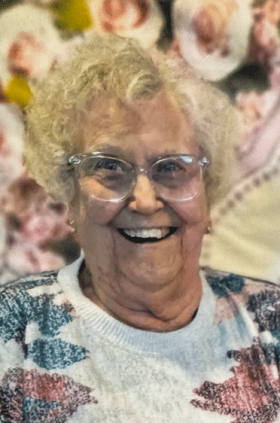
Barbara Marie (Julius) Lappin, 89, of Sesser, Illinois, passed away on Wednesday, December 17, 2025 at Stonebridge in Mt. Vernon, Il.

Born September 15th, 1936 in Jefferson County to John and Petronilla (Puleikis) Julius. She attended St. Barbara’s Catholic School in Scheller, IL. and graduated from Goode Barren Township High School in 1954.

She married Robert L. Lappin on February 19th, 1955. They had three sons and one daughter; Robert Brent, Mark Lee, Barbara Jayne, and Marion Ray. Barbara was best known as the longtime owner of the Custard Stand in Sesser, which she ran for nearly a quarter of a century.

She was an avid painter and loved spending time with her grandchildren, occasionally taking them on trips in her earlier years. She also enjoyed going to see her musically talented family perform at various venues, especially at her annual “Garage Band” birthday parties. Family and friends would come from miles away to celebrate with her. In her last years she had the great joy of seeing her Great Grandchildren as they visited her at her residence.

Barbara is survived by her sons; Robert B. Lappin (Kay Kimmel) of Burbank, CA, Mark (Mona) Lappin,Marion (Kelly) Lappin of Sesser, and daughter Barbara Jayne Lappin of Crainville, Il. Grandchildren; Matthew (Brittany) Lappin, Carly Gregory, Marcus Lappin, Rae (Ross) Worthey. Seven Great Grandchildren; Arthur, Ellie, and Olive Lappin. Harrison Hoekstra (Marcus) Jane Pearl, Marigold Lee and Flora Marie Worthey, and several nieces and nephews.She was preceded in death by her father John Julius, mother Petronilla (Julius) Heck, brother John Julius, sister Leona Lee (Julius) Heck and her husband Robert L. Lappin.

Funeral services will be held at the Brayfield-Gilbert Funeral Home in Sesser, Il, Monday December 22, 2025, with Monsignor David Darin officiating. Visitation will be from 11:00 am to the time of the funeral at 1:00 pm. Burial will be at Maple Hill Cemetery in Sesser.In lieu of flowers, donations may be made to the Alzheimer’s Association or Autism Awareness.

For more information go to our website www.gilbertfuneralhomes.com

James E. Pluess-Harrisburg, Illinois

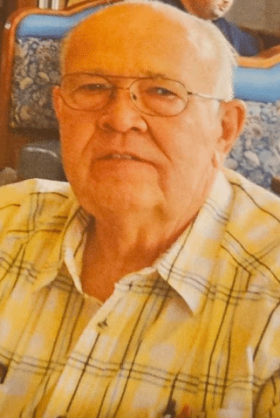
James Edward Pluess, age 82, of Harrisburg, IL died at 12:58 a.m. Tuesday, December 16, 2025, at the Memorial Hospital of Carbondale, Illinois.

Per his wishes he will be cremated, and a private family service will be held at a future date.

James was born on September 27, 1943, in Chicago, Illinois, the son of Emil Pluess and Helen (Gorzney) Pluess. He married the former Karen Doris Sterling on October 1, 1966, and together they shared 59 years of marriage.

Before retirement, he was Supervisor for the Wastewater Treatment Plant in Bloomingdale, Illinois.

He and his wife were members of the First United Methodist Church of Harrisburg, Illinois.

Jim enjoyed collecting diecast cars and watching NCIS. Most of all, he enjoyed spending time with his family.

Surviving is his loving wife Karen Pluess of Harrisburg, Illinois; three children: Patricia Norman and husband Charles of Maiden, North Carolina, James Edward Pluess, II and wife Renee of Stanford, Kentucky, Michelle Pluess of West Chicago, Illinois; two grandchildren Zachary Chavez of West Chicago, Illinois, Nikol Shands and husband Perry of Knoxville, Tennessee; a half-sister Pat Wenberg and husband Dan of McHenry, Illinois, a half-brother Paul Ludwig and wife Jackie of Algonquin, Illinois; several nieces and nephews, and his four legged family members including Mya, Burberry, Zoey and Paisley.

He was preceded in death by his mother Mary Ludwig, his adopted parents Emil and Helen Pluess.

The family prefers Memorial Contributions be made to the First United Methodist Church of Harrisburg, Illinois; or to the Friends of Saline County Animal Control.
To give condolences online to the family or to share memories of Jim, visit www.lpfuneralhome.com.
The Leffler Funeral Home of Benton, Illinois, is in charge of the arrangements.

Merrill Rose-Benton, IL

Merrill Gene Rose, age 84, of Benton, passed away at 4:55 p.m. Sunday, December 14, 2025, at his home.

Merrill was born on February 9, 1941, in Benton, Illinois; the son of James Paul Rose and Lela (Wilson) Rose.

He was a retired coal miner. He worked at Freeman United Coal Company Mine #6 of Waltonville, Illinois. He was a member of the U.M.W.A.

Mr. Rose was also a member of Rend Lake Lodge #64, Scottish Rite Bodies of Southern Illinois, and the Ainad Temple of the Shrine.

Before it’s closing, he and Diane attended Parrish Baptist Church.

Merrill enjoyed attending car shows, fishing, going to auctions, and hanging out in his garage visiting with friends.

Surviving are two sons: John Rose and wife Judy of Benton, IL, Ron Rose and wife Lisa of Benton, IL; his life companion of 22 years Diane LeFever of Benton, IL; grandchildren including: Amanda Gates and husband Justin of Benton, IL, James Paul Rose and companion Alyssa Drenckpohl of McLeansboro, IL, Scott Rose and wife Rebecca of Bolivar, MO, Nicholas Scro of West Frankfort, IL, Alyvia Scro of West Frankfort, IL, Sophia Kendrick of Benton, IL; great-grandchildren: Eli Hill, Samuel Gates, Jackson Rose, Lillith Rose, Owen Stapp, Bentley Scro, Myles Little and Jackson Little, a sister-in-law Judy Rose of Benton, IL, a niece Laura Richardson and husband Eddie of Benton, IL, a nephew Gary Rose and wife Rhonda of Peoria, IL.

He was preceded in death by his parents, two brothers: Curtis Rose and Paul Wayne Rose, a great-grandson Cordell Michael Ray Rose, two nephews: Bobby Rose and James Rose.
Funeral Services will be held at 12:00 noon Saturday, December 20, 2025, at the Leffler Funeral Home, with Pastor Howard Johnson officiating. Burial will follow in the Masonic & Odd Fellows Cemetery of Benton. Visitation will be from 10:00 a.m. to 12:00 noon Saturday, at the Leffler Funeral Home of Benton.

The family prefers Memorial Contributions be made to the American Cancer Society and will be accepted at the services.
To give condolences online to the family, or to share memories of Merrill, visit www.lpfuneralhome.com.

.

December 13, 1977: A day of tragedy and tears

(Editor’s Note: Today– December 13 — marks the 48th anniversary of the plane crash that killed the entire University of Evansville basketball team. Three players from Southern Illinois — Mike Duff and Kevin Kingston, of Eldorado and Greg Smith, of West Frankfort — died in that crash.

In 2007, as publisher of Southern Illinois Sports Connection Magazine, I wrote a story about the 30th anniversary of that rainy, dreary and tragic day in 1977, the 30th anniversary of the Evansville disaster. I spent more time and more effort on that story than anything I’ve ever written, mainly because there were so many people that had to be interviewed and so many story lines to weave together. To honor those who died in the crash, and to educate a younger generation about this event so it is never forgotten, this is the story in its entirety. – Jim Muir)
December 13, 1977 – A Day of tragedy and tears

By Jim Muir

There are moments in life that are so shocking and so surreal that they are forever etched in our minds and seared in our conscience. The memories of those events are so vivid that we can pinpoint exactly where we were at, who we were with and in some instances even what clothing we were wearing.

Think of the assassination of President John F. Kennedy, the explosion of the space shuttle Challenger and in more recent times the 9-11 terror attacks.

The same can be said, particularly for area sports fans, about the date Dec. 13, 1977 – the day that the entire University of Evansville basketball team died in a fiery plane crash less than two minutes after take-off from Dress Regional Airport, in Evansville. In all 29 people died in the crash including 14 players, head coach Bobby Watson, one trainer, two team managers, the school’s sports information director, a longtime radio sportscaster, the assistant athletic director, three crew members and two airline officials.

Three members of that team – Mike Duff, Kevin Kingston and Greg Smith – were Southern Illinois high school basketball standouts that had thrilled fans with their athletic abilities. All of Southern Illinois was proud that the three area players had taken their considerable skills to Evansville, who had just made the move to Division I basketball.

Following news of the crash the sense of loss and the grief throughout Southern Illinois during that Christmas season was immeasurable. On the 30th anniversary of that event and to honor those who died Southern Illinois Sports Connection looks back at that fateful, foggy night through the eyes of six people that were intimately entwined in the lives of those who perished.

A Young Reporter and the Story of a Lifetime

On the night of Dec. 13, 1977 Rich Davis reported to work at the Evansville Courier & Press expecting it to be a typical Tuesday night.

Davis had worked at the newspaper for four years covering hard news stories but said nothing had prepared him for what he would experience that December night.

Davis, now 58, still works at the newspaper and recently recalled the events of that night three decades ago. Davis remembered that word was received in the newsroom shortly after 7:30 p.m. that a plane had gone down near the airport.

“The first indication was that it was a commercial flight,” said Davis. “Nobody even suspected it was the Aces because they were supposed to fly out at about 4 p.m. but we didn’t know then that the foggy conditions had prevented their charter flight from arriving from Indianapolis. Even when we got to the sight and started making our way toward the wreckage we didn’t have any idea.”

The plane had taxied down the runway at 7:21 p.m. and less than 90 seconds later crashed in a hard-to-reach area east of the main runway near Melody Hills subdivision. Davis and two other reporters headed to the scene. He described the weather conditions as “miserable, just terrible.”

“I really don’t remember it being that cold but it was just a misting rain all day long and very foggy, a pea-soup kind of night,” Davis said.

The three reporters traveled as far as they could by car until they encountered a dead-end street. At that point they exited the vehicle and what Davis described as “an odd event” took place.

“We were standing there trying to figure out how to get to the crash site and by then there was security everywhere and from out of nowhere this kid walks up to me, he couldn’t have been more than 10 years old, and says ‘Mister, I can get you down there, I know how to get there.’ So we start following this little boy through brush and thicket and woods and there was mud everywhere,” Davis recalled. “When we got down there the plane had actually crashed in a ravine by a railroad track. As we got closer I could see the tail of the plane up on this ridge above us and there were still some small fires. When we arrived they had already started trying to recover the bodies.”

Even as he made his way to the wreckage Davis still believed the crash was a commercial jet.

“When we got close enough I saw a bunch of Aces’ duffel bags and tennis shoes scattered everywhere,” recalled Davis. “It would have been horrible regardless, but when I realized it was the Aces I just had this overwhelming feeling of grief.”

Davis explained that the 1977-78 basketball season was a milestone for the Evansville program as they made the jump to Division I for the first time. He said the Aces enjoyed unrivaled stature in the community due in large part to winning five Division II national championships during a 12 year span under legendary Coach Arad McCutchan.

Davis said one particular moment stood out that night during the recovery of bodies.

“Because of where the crash took place the only way to get the bodies out was to bring a train in,” said Davis. “It was very foggy and I still remember the light of that train cutting through the fog and the misting rain and when they blew the whistle I remember how mournful it sounded. They transported the bodies from there downtown to a makeshift morgue.”

Davis said on a national scale the grief associated across the nation with the 9-11 attacks was comparable but regionally he has never encountered – and he doesn’t expect he ever will – any story as devastating as the plane crash.

“As the horror of what happened took hold the entire community was just absolutely devastated,” said Davis. “That night I was so caught up in it that I didn’t have time to even think about what had happened. It was just surreal. The grief was everywhere because people just couldn’t comprehend something of this magnitude. I mean, in one horrible moment this city lost something very, very special. The coach, the team … everything was just wiped out that night.”

Diamond Avenue and U.S. Route 41

Marie Kothe was a senior at the University of Evansville on that tragic night 30 years ago. Kothe, who ironically works at Evansville Regional Airport (formerly Dress Regional Airport), said the details of the plane crash are just as fresh today as they were in 1977.

“I had just gotten out of a night class, it was a nutrition class, and was driving home when I heard on the radio that the Aces’ plane had crashed,” said Kothe. “I remember that I was sitting at a red light at the corner of Diamond Avenue and Route 41. I was immediately in a state of shock. I remember looking over in the direction of the airport and it was cold and rainy and dreary. I drove on home but I don’t remember the drive. I remember staying up all night watching television.”

Much the way reporter Rich Davis remembered it, Kothe said the grim reality of what had happened and what had been lost didn’t sink in for a few days.

“When they started announcing names and I could put a connection with the names it was worse,” said Kothe. “The word that comes to mind when you talk about the community as a whole is stunned, I just think the entire city was walking around stunned about what had happened. I don’t think I even cried for a couple of days and then all of a sudden it hit me about what had happened.”

Kothe has worked at the airport for four years and noted that the plane crash was on her mind even when she applied for the position.

“I mean you can just look across the field there,” said Kothe pointing in the direction of the crash site, “and you automatically remember what happened. The people that were here in Evansville will never forget that night.”

A Coach Remembers

Aside from family members perhaps nobody had more connection to the three Southern Illinois athletes that died in the Evansville plane crash than Bob Brown.

A legendary high school player at West Frankfort in the late 1950s and early 1960s Brown played college basketball at the University of Illinois. He still holds the single game scoring record at West Frankfort, a 52-point explosion against Herrin where he scored 29 points in the fourth quarter.

Brown took over as head coach at Eldorado during the 1972-73 season and coached at the Saline County school for five years, compiling an impressive overall record of 121-30. During that span Brown coached Kevin Kingston two years and coached Mike Duff three years. That five year span included two unbeaten regular seasons and three trips to the Elite Eight, played in Champaign during that era. In 1975 the Eagles finished fourth, were beaten in the quarter-finals in 1976 and then returned in 1977 to finish in third place.

“Every year I was at Eldorado was very special,” Brown said. “Those kids worked so hard for me, they were just warriors.”

Brown’s oldest son, Mike, was born during his coaching days in Eldorado and was named after Duff, he said.

“I loved the kid (Duff),” Brown said. “All three of these young men were the kind of guy you’d want in a foxhole with you.”

Along with his association with Duff and Kingston Brown, because he is a native of West Frankfort had known Greg Smith also and was even instrumental in helping him secure a basketball scholarship to Evansville. Smith had already committed to attend Millikan University but changed his mind after Brown lobbied Evansville Coach Bobby Watson to give the West Frankfort standout a scholarship.

“I’ve thought about that often,” said Brown. “I had a part in him (Smith) going to Evansville. That was tough to take.”

Following the 1976-77 season Brown left Eldorado and took a coaching job at West Frankfort. Like all those involved in the tragedy he remembers distinctly where he was at when he heard the news about the plane crash.

“I was still living in Eldorado and when I was driving home that evening, I never will forget, I was driving through Galatia I heard something about a plane crash on the radio, just bits and pieces, there was no real details,” said Brown. “When I pulled into my driveway my wife ran out to the car and I knew something serious had happened. I immediately started making phone calls to see if anybody had survived. It was difficult to get all the details. You have to remember that in 1977 it wasn’t like it is now with cell phones and cable television.”

Even 30 years after the plane crash Brown still gets emotional when discussing the death of Duff, Kingston and Smith.

“I’ve never in my life experienced something as devastating as this,” said Brown. “It took a lot out of me and to be honest I was never quite the same afterwards. I mean these were kids that were hard workers, disciplined, intelligent and they had their entire life in front of them. It was just hard to believe that something like this could happen. The absolute toughest thing I’ve ever had to do in my life was go to those three wakes that week.”

A wake for Duff and Kingston was held at the Eldorado High School gymnasium (later named Duff-Kingston Gymnasium), Brown recalled. He said it was a fitting tribute that the two players be memorialized together but he also found it to be a cruel irony.

“Here are these two caskets on the same basketball floor where we had all these wonderful moments and memories,” said Brown. “I just remember that the grief was unbearable.”

Brown said all three funerals were held on the Friday following the Tuesday plane crash. He said his West Frankfort team had a game scheduled with Harrisburg on the night of the funeral and after consulting with the Smith family it was decided to play the game.

“We were not very good and hadn’t won a game at that point in the season,” said Brown. “I showed up and I tried to talk to my team but I just couldn’t do it. We ended up winning the game, I don’t know how, but we did somehow. I can honestly say that coaching just wasn’t the same for me after that plane crash.”

Brown said he often thinks of Duff, Kingston and Smith, and not just near the anniversary of their deaths, and even has a portrait of the three players in his living room. Brown said he believes all three would have been successful as adults.

“I think Duff would have played in the NBA, he was that good,” said Brown. “I believe Kevin would have been a high school coach and with his work ethic would have been a great coach. And as intelligent as Greg was, he could have done anything he wanted to do.”

A Phone Call from the Airport

In her words Kay Barrow remembers the details of Dec. 13, 1977 “just like it was yesterday.

Barrow, the mother of Mike Duff, was working in the Eldorado office of her husband, Dr. John Barrow, a well-known orthopedic surgeon. She said she remembers a late afternoon phone call from Duff, the last time she and her son would ever talk.

“Mostly I remember that he was happy that afternoon,” Barrow said. “He called to see if we were going to make it to the game the next night and he also told me that their flight had been delayed because of the weather. It was just a typical conversation but the main thing I remember is that the last time I talked with him he was happy.”

Barrow said she heard the news about the crash while listening to an Eldorado basketball game that night.

“It was just one of those moments in life when you just don’t want to believe what you just heard,” she said. “We started calling people we knew in Evansville trying to find out the details, looking back it was just surreal. It was just a short time after we heard the news that people started coming to the house trying to be with us and to help take care of us. That night and that entire week were just like a blur to me, we went around in a daze.”

Barrow said the years have helped lessen the grief but she said that December remains a difficult month even three decades after the plane crash.

“December is always a tough month and it always will be,” Barrow said. “I do anything I can, frantically clean house, put up Christmas decorations, just anything to keep my mind off of it. Christmas has never been quite the same for me.”

Barrow said there are also little, unexpected things that create a flood of emotions.

“Before the plane crash I had ordered Mike a down-filled coat for Christmas, I ordered it from an L.L. Bean catalog,” said Barrow. “The other day we got an L.L. Bean catalog in the mail and I automatically thought about that December in 1977. And it’s not just that, there are little things all the time that make you remember.”

Noting that he would now be 48 years old, Barrow said she often wonders what kind of man her son would have made. Saying that “Mike will always be 18” she said she has watched his classmates at Eldorado grow into middle age and that always rekindles memories of her son.

Duff played only four games for Evansville prior to the plane crash and the final game he played was against Indiana State, who was led by Larry Bird. Duff scored 23 against Bird in his last game, prompting Evansville Coach Bobby Watson to say after the game that Duff would be as good as Bird, who was two years older. Barrow said she and her husband met Bird a couple of years ago and the former NBA great told them that he remembered that particular game. She said they also met Magic Johnson, who Duff played with in an all-star game before entering college. Barrow said Magic also told the couple he remembered playing against their son.

“Little things like that means a lot,” she said.

Barrow said she recently had an unexpected emotional moment when she heard a story concerning Sam Clancy, a friend Mike had met while playing in an all-star game in Pittsburg the summer before he died.

“I just heard recently where Sam Clancy’s son is playing basketball at UCLA,” she said. “It’s just little things like that that brings it all back.”

A Last Lunch Date

Donald Kingston was working as an assistant basketball coach at Eldorado High School in December 1977 and his son Kevin was in his senior season at the University of Evansville. Given the rigors of both their schedules opportunities for the Kingstons to get together were few and far between.

Looking back three decades Donald Kingston said he recalls the details of Dec. 11 that year as well as he does Dec. 13 – the day his only son was killed in the plane crash. Kingston traveled to Evansville on the Sunday prior to the Tuesday plane crash to have lunch with Kevin – a lunch date that included a heart-to-heart talk. The elder Kingston still cherishes that conversation.

“Kevin worked hard for everything he had achieved, he just outworked other people his entire career,” said Kingston. “And that day we ate at Red Lobster and I told him I loved him and how proud I was of him for all the hard work and for all that he had accomplished. That was the last time I ever talked to him.”

On that fateful Tuesday night Kingston was with the Eldorado basketball team at a game at Norris City. Kingston did not ride the bus that night, instead driving his car to the game. On the return trip to Eldorado he and his wife heard news of the plane crash on the radio.

“Think about this, I was driving along and I heard the announcer come on and say that the Aces’ plane had crashed and that Kevin Kingston was dead.” said Kingston. “I’ll never forget that, you’re hoping that what you just heard isn’t true but deep down you know that it is.”

Kingston said his daughter (four years younger than Kevin) was a cheerleader for Eldorado and was on the bus. He said the players and cheerleaders also heard the news en route back to Eldorado.

“We still had to go to the gym to pick her up and she was just devastated,” Kingston said.

Kingston said instead of dwelling on the crash that took his son’s life he has instead tried to keep his focus on the outstanding career his son had, particularly the great teams at Eldorado.

“Bob Brown was a great coach, those kids would do anything for him,” said Kingston. “Those were very special times in Eldorado. Mike Duff was a great player and I believe he would have played professional basketball. Kevin didn’t have the God-given talent that some players have but he just worked so hard. He was always the best defensive player on every team he played on.”

Kingston said he also thinks often about what the future would have held for his son.

“I really think Kevin would have been a coach and I think he would have been a good one,” said Kingston. “He was a senior at Evansville and he had already agreed to stay on and work as a grad assistant the next year. He always said that he wanted to come back to Eldorado and coach. I think about that a lot.”

‘It’s with you all the time’

On a trip to Evansville in early December of 1977 to see their son Greg play basketball Art and Carolyn Smith decided to do some Christmas shopping. The Smiths bought several gifts, mostly clothing for Greg, a freshman point guard for the Aces.

Carolyn said the clothes she painstakingly picked out for Greg during that shopping trip were never wrapped.

“We ended up burying Greg in those clothes,” she said. “I think about that every single December.”

Smith was a 1977 graduate of West Frankfort High School where he was a three-year starter and standout for the Redbirds. After graduation he signed to go to Millikan University but then later changed his mind and was awarded a scholarship to play at Evansville.

“Greg was so excited about going to Evansville,” said Art. “He loved basketball, he studied the game and he worked really hard to become a better player. Greg was having the time of his life at Evansville. He was more excited about getting that scholarship to Evansville than I had ever seen him.”

In 1977 the Smiths were the majority owner of WFRX radio in West Frankfort and it was a call from the station that first alerted him that something might be wrong. Asked where he was at when he learned about the plane crash Art answered immediately.

“I was right here in this room,” he said waving his arm in a circular motion around the family room. “I received a call about 8 p.m. that there had been a plane crash near Evansville but I didn’t think for a second that it was the Aces because I knew they were supposed to fly out at 4 p.m. so I figured that they were already in Nashville.”

Smith said a second phone call moments later confirmed that it was the Evansville team and within seconds Gail Borton, principal at the high school and Harold Hood, the high school coach showed up. Borton volunteered to drive the Smiths to Evansville.

“We found out where they had the morgue set up and we went there first,” Art recalled. “After we arrived, the assistant coach who was not on the plane came running over and told us that Greg was still alive and had been taken to Deaconess Hospital. We went straight there and the doctor came out just as soon as we arrived and said that Greg had died five minutes before we got there.”

Art said identifying his son’s body is the hardest thing he’s ever had to do. He also noted that it was the first time Greg had ever flown.

“They told me I could stay with him as long as I wanted and I stayed with him for quite a while. I didn’t want Carolyn to go,” said Art. “I remember after that we went down to the little chapel at the hospital and just sat there and stared at each other and never said a word. What can you say at a time like that?”

The Smiths said the loss of their son shook their once-strong faith to the core.

“We were active in church and we just quit going, we quit for 20 years,” said Art. “The church was good to us and the pastor was good, but we were angry. Thoughts of ‘why’ ran through my mind a lot. I don’t know how we would have gotten through it if it hadn’t been for our other two children. They were involved in other activities and we had to go on … I think they gave us the will to go on.

The Aces had played only four games prior to the plane crash and Greg got to see action in only the Indiana State game – the last game the 1977-78 team ever played. In all, Greg’s collegiate career spanned three minutes. Yet Art recalled him being in a great mood the last time they talked.

“He had gotten in to a game for the first time against Indiana State with about three minutes left,” Art said. “It just so happened that when he came in the game Larry Bird came out of the game. He said, ‘I guess they didn’t want me to embarrass him.’ He was laughing about that, he was in good spirits the last time we talked.”

Art and Carolyn agreed that every memory of Greg is a good one – something that has helped sustain them through the years.

“He was just such a good boy,” said Carolyn. “I can never remember one time ever that I had to get on him about anything. He tried so hard to please, he was an excellent student. He was just the type of person you wanted to be around.”

The Smiths said that the loss of their oldest son has never really lessened throughout the years.

“Even after 30 years … it’s with you all the time,” said Art. “But, it’s worse in December because all those memories come back every year.”

_____________________________________________

Did the NBA lose a future star?

How good could Mike Duff have been if he had not lost his life in the Evansville plane crash? The answer to that question from all who watched him play was that he would have someday made a living playing basketball in the NBA.

On the final game of his life, Dec. 10, 1977 Duff, only a freshman, scored 23 in a loss to highly-ranked Indiana State and Larry Bird. An excerpt from a story in the Evansville Courier & Press following the Indiana State game shows that Duff had already caught the attention of Evansville Coach Bobby Watson.

The story read in part:

“Watson, not one to give out accolades, said following the loss to Indiana State that freshman Mike Duff would “be as good as Larry Bird in a couple of years.”

Duff’s high school coach Bob Brown also believes he would not only have played, but starred in the NBA.

“There’s no question about it,” Brown said. “He was 6’7” or 6’8” and he could go inside, come outside and shoot the mid-range jumper. He was quick and smart and he would have just kept getting better. He hadn’t come close to realizing his full potential yet.”

Duff’s high school statistics are eye-popping by any standard and he still holds virtually every Eldorado scoring record.

Duff records include:

Game – 47 points

Season – 1,097 points

Career – 2,558 points

Points per game – 32.3

Rebounds game – 28

Rebounds season — 515

Career

Points per game – 25.8 (over three years)

Rebounds – 1,287

Don Kingston, whose son Kevin was also killed in the plane crash, echoed Brown’s words. Kingston was an assistant coach at Eldorado during Duff’s glory days when he led the Eagles to three straight Elite Eight appearances in Champaign.

“He had greatness all over him,” said Kingston. “I don’t think there is any question that he would have played professional basketball. I mean think about that, as a freshman in his fourth collegiate game he scored 23 against Larry Bird and Indiana State. He had all the physical skills and plus he had the determination. Yeah, I believe he would’ve played professionally.”

— Jim Muir —

—————————————–

Fate Played a Role that December

In any tragedy fate always seems to play a role but in the Dec. 13, 1977 plane crash that claimed the lives of the Evansville Aces there were several ironies that can’t be overlooked.

* McLeansboro native and current Utah Jazz Coach Jerry Sloan, who led Evansville to a pair of Division II national titles, was hired as the head coach at Evansville prior to the start of the 1977-78 season, but abruptly resigned the position three weeks later. Bobby Watson, an assistant at Oral Roberts, was hired to replace Sloan and died in the crash.

* David Lee, a teammate of Sloan at McLeansboro, had agreed to work as an assistant with Sloan at Evansville during the 1977-78 season. After Sloan resigned the position was not available to Lee, who later went on to lead McLeansboro to a Class A state title in 1984. The Foxes compiled a perfect 35-0 record and were led by Brian Sloan – Jerry’s son.

* West Frankfort standout Greg Smith had signed to play for Joe Ramsey at Millikan University and was already on campus when he was asked to try out for one open scholarship at Evansville. Smith beat out more than 20 others and won the full-ride scholarship. Smith then transferred to Evansville and died in the crash less than three months later.

* Mike Duff was recruited by virtually every college in the nation including Kentucky, Duke, North Carolina, Illinois and UCLA. Duff signed a letter-of-intent to attend Missouri and play for legendary Coach Norm Stewart but later changed his mind and opted out of the contract to attend Evansville. The fact Evansville was making the move to Division I that year allowed Duff to get out of the contract with Missouri. Like Smith, Duff would die less than three months later.

* Tom Collins, a reporter with the Evansville Courier, was scheduled to travel with the team to Nashville on Dec. 13, 1977 to cover the game against Middle Tennessee State, but his assignment was changed by his editor at the last minute and he remained in Evansville. Collins had planned to drive to Nashville the following day to cover the Dec. 14 game against Middle Tennessee State – a game that was never played.

* David Furr was a star basketball player at Olney High School and had a scholarship to play at Millikan University. Instead he opted to go to Evansville and walk on. Furr injured his ankle while trying out for the Aces but Coach Bobby Watson said that he had like what he saw from Furr and asked him to stay with the team and try out again after his ankle healed. While his ankle was on the mend Furr became the team statistician, working home games but not traveling with the team. So, Furr was lucky he wasn’t on the doomed plane that night in December 1977 and actually became the only team member to survive.

But, fate was still not through during that cruel December because Furr and his brother Byron were both killed in a two-car crash while they were driving home from a holiday basketball tournament in Charleston. David Furr was driving and lost control of the vehicle and crossed the centerline striking a utility truck head on. The accident took place on Dec. 27 – exactly two weeks to the day after the plane crash.

— Jim Muir —

Shannon Tate-Benton, IL

Shannon Dwayne Tate, age 51, of Benton, passed away at 11:11 p.m. Wednesday, December 10, 2025, at the SSM St. Mary’s Good Samaritan Hospital of Mt. Vernon, Illinois.

Shannon was born on September 4, 1974, in Benton, Illinois; the son of Charles “Bud” Tate and Patricia Ann (Tamm) Tate.

He was a graduate of BCHS Class of 1993. He enjoyed attending Whittington Church.

He worked as a security guard for American Coal Company/Murray Energy of Galatia, Illinois.

Shannon enjoyed going hunting and fishing. He liked to make people smile and laugh and never met a stranger.

Surviving is his loving mother Patricia Tate of Benton, IL; siblings: Gina Tate, Jeremy Tate, Benji Tate, Scott Tate and Christi Volkman and husband Paul all of Benton, IL, Hannah Akin of Belle Rive, IL; an aunt, Alice Schablowsky and husband Rick of Mulkeytown, IL, and several nieces and nephews.
He was preceded in death by his father Charles “Bud” Tate, stepmother Dolores Tate, a brother Tom Tate, uncles Larry Tate and Clarence Tate, aunts Beulah Overturf and Marie Williams, and a great-nephew Liam Tate.

Celebration of Life Services will be held at 6:00 p.m. Wednesday, December 17, 2025, at the Leffler Funeral Home of Benton, with Rev. Mark Minor officiating. Visitation will be from 4:00 p.m. to 6:00 p.m. Wednesday at the Leffler Funeral Home.

To give condolences online to the family, or to share memories of Shannon, visit www.lpfuneralhome.com.

Duward Dee Bean – Nashville, IL (formerly of Benton, IL)

Duward Dee Bean, 95, of Nashville, IL passed away at 3:40 a.m., on Saturday, December 6, 2025, at Axiom Gardens in Nashville, IL.

He was born on January 5, 1930, to Herman and Nannie (Elam) Bean in Anna, IL. He was a 1947 graduate of Anna-Jonesboro High School and earned his Bachelor ‘s degree in Business in 1952 from Southern Illinois University. He married, Lorelei (Savino) Brasch, and she preceded him in death on February 28, 2002.

In 1952, he started his career as an Insurance Agent with Country Companies. A year later, he was promoted to Agency Manager in Franklin County, Illinois — the youngest Agency Manager in the State of Illinois. He was with Country Companies for 25 years.

In 1956, he started Bean Farms. In a span of 45 years, 40 acres became a 4,500 acre farm operation.

He was a member of Immanuel Baptist Church in Benton. He was also a member of the Benton Elks Lodge No. 1234 and the American Legion Post 110 in Nashville, IL. Duward served on the board of the McGinnis Cemetery for over 20 years and was instrumental in expanding the cemetery and enhancement of its roads and grounds.

Duward is survived by his loving daughters, Kay Grimes of Sarasota, FL and Carol (Michael Goad) Bean of Louisville, KY; his grandson, Jacob (Tiffany) Grimes of Fort Payne, AL and his great-grandchildren, Shane Grimes and Jace Grimes.

He was preceded in death by his parents, Herman and Nannie Bean, his wife, Lorelei Bean, three brothers, Harold, George, Ron, his sister, Sarah, and special friend, Pat Hargan.

Services have been entrusted to Pate Funeral Home, 301 South Main Street, Benton, IL.

Visitation will be held on Saturday, December 27, 2025, from 10:00 a.m. to 12:00 p.m., at Pate Funeral Home, Benton, IL.

Funeral services will be held on Saturday, December 27, 2025, at 12:00 p.m., at the Pate Funeral Home, Benton, IL, with the Reverend Mark Minor, officiating.

Burial will be private and will take place at a later date in McGinnis Cemetery, Anna, IL.

In lieu of flowers, memorials may be made at the funeral home to The Franklin County 4-H, an organization he supported for over 60 years.

Online condolences can be given at www.patefh.com.

Benton, West Frankfort, Illinois News | Franklin County News