Study shows RLC makes huge economic impact on the region

INA, Ill. – Odds are you or someone you know has been affected by Rend Lake College’s economic impact in the last decade, whether that be directly from graduating with a degree or certificate and a subsequent increase in wages, or indirectly through a number of capital projects.

A new “Economic Impact of Rend Lake College” (EIS) report investigated the many economic contributions RLC makes in the region, in what the study calls “the least measured and understood” strength of the college. The report was prepared by the Center for Governmental Studies at Northern Illinois University (NIU) in partnership with the Illinois Community College Board (ICCB) and the Illinois Department of Employment Security (IDES).

The source of community college student employment and earnings data is the Unemployment Insurance (UI) wage record data reported by Illinois employers for each of their employees. UI data are collected on a quarterly basis by the IDES. Using these data, the EIS examined student enrollment and completion data over a 12-year period and matched earnings data with students who graduated or otherwise left the college for two, full, consecutive semesters.

Of RLC’s strengths, the EIS states that the college, “adds skills for the local workforce; boosts the competitiveness of area businesses; graduates individuals who generate millions of dollars in local, state, and federal tax revenues; and increases earnings for workers who have graduated.”

RLC President Terry Wilkerson knows the importance of the college to the local communities and sees the positive effects it has on a day-to-day basis.

“The faculty and the staff at Rend Lake College know the significance of being a community college that continues to have a huge impact on local people and businesses,” said Wilkerson. “We know that we can go to almost any business in the area and find an RLC grad or someone who has attended to improve their existing skills. We’re training our friends and neighbors here, and this Economic Impact Study is affirmation that we’re doing something right for them.”

Among the biggest benefits of RLC are the opportunities it opens for students who attend and graduate. The EIS states that a 25-year-old program graduate of RLC can expect a total lifetime earnings gain of $602,000 – a 46 percent increase over those not completing a community college program.

Additionally, students who completed their education at RLC in 2011 have seen a $5,644 increase in earnings over their pre-enrollment wages.

“It’s proven that a community college education is both an investment and a savings for those who take advantage of our services,” said Wilkerson. “By setting aside time to complete a program or certificate at RLC, students are foregoing earnings, but the rate of return on that investment is well worth it.”

In the year following completion, 81 percent of students who graduated in 2011 were employed in Illinois, which is slightly higher than the statewide average of 77 percent. Looking further back, 92 percent of students who graduated in 2005 were employed in Illinois within five years after completion.

RLC students also make up a large portion of taxpayers in the district. Both enrollees and completers from 2003 have paid an estimated $80 million in state taxes and $268 million in federal taxes combined through 2012.

The college is among the largest employers in the district and continues to generate additional economic benefits for local communities through expenditures and employment impacts. In 2012, almost 420 faculty and staff members lived in the district, with a total payroll of almost $13.2 million.

The college also purchases goods and services from local communities, in addition to income earned and then spent by employees, to further boost the local economy. In 2012, RLC reported $10.6 million in operating and capital expenditures. As these expenditures mixed into the local economy, RLC’s direct and indirect expenditures approached a total of $19.5 million in value and 500 jobs, according to the study.

“Like me, many of our faculty and staff are Rend Lake graduates themselves who see the value in a post-secondary education and are driven by the need to pass their knowledge on to others,” said Wilkerson. “While our employees are a big factor in the local economy, we also work with other businesses for projects, like the recent Pathway to Success or renovations to the art classrooms, and those businesses employ their own people who in turn continue to pump money back out. It’s one big cycle that I’m proud to say RLC is a vital part of.”

The EIS report also delved into the characteristics of students and program enrollment at RLC to better understand the economic impact. These students attended RLC between 2000 and 2012.

Overall, there has been an increase of about 3,100 enrollments at RLC in credit courses, going from 11,344 in 2000 to 14,469 in 2012. The rate of increase in program completers has also increased, according to the study, from 518 in 2000 to 877 in 2012, a 69.3 percent increase.

The study also found more students enrolling immediately after high school with the declining age of enrollees. The average age of students enrolling in 2000 was 37.3, and the number decreased to 34.7 in 2012. In fact, the percentage of enrollees aged 24 or less increased from 25.3 to 35.2 during those same years. Likewise, the average age of completers also decreased from 27.4 to 26.6 years.

Veteran enrollment has also increased at RLC, with a total of 790 veterans making up 5.5 percent of the total enrollment at RLC in 2012. They were 3.8 percent of the completers in 2012 as well. That same year, RLC was awarded its first of three consecutive Military Friendly School recognitions by veteran-owned business Victory Media. The credit was the result of a survey of approximately 8,000 schools based on their support of military students.

Of all the enrollees, the largest percentage of students (51.5 percent in 2012) indicate that improving skills for a current job as their purpose for attending RLC. Other large groups have been personal interest, followed by those preparing for a future job. Students pursuing an associate degree made up the majority of completers every year from 2000 to 2012.

Three programs represented 80 percent of all enrollments: vocational skills, baccalaureate instruction, and transfer instruction. Of those, four broad instructional programs stand out with 88 percent of enrollments in 2012, including health professions and related sciences; liberal arts and sciences, general studies and humanities; engineering-related technologies; and multi- or interdisciplinary sciences.

Health professions improved the most from 11 percent in 2000 to 45 percent in 2012. The same programs also had the largest percent of completers in 2012 at 35 percent, followed by liberal arts and sciences at 24 percent.

Kim Robert, RLC Dean of Allied Health, said the increase in enrollment into the health care programs and certificates is largely due to the growth in options for students and the bigger need in the community to care for an aging population.

“Since 2007, we’ve added two new Allied Health degrees in the Certified Medical Assistant, which is also a certificate, and the Radiologic Technology programs. We also have seven certificates for more specified instruction,” said Robert. “In our district alone, there is a growing need for people in the health care industry that can’t be filled quickly enough, resulting in more of our students getting jobs immediately following graduation. It’s wonderful to see the huge growth in attendees and graduates who are getting back out into the workforce.”

Modeled after a statewide economic impact analysis of Illinois Community Colleges, the EIS for RLC was com­missioned to better understand the return from investing in the college. About 15 individuals from NIU, the ICCB, and the IDES contributed to developing the report.

RLC is one of 39 community colleges in the state that play a vital role in the educational and workforce preparation of the individuals and communities they serve. RLC provides high-quality, accessible, and cost-effective educational opportunities for residents in an eight-county area in Southern Illinois that includes portions of Franklin, Hamilton, Jef­ferson, Perry, Washington, Wayne, White, and Williamson counties.

Founded in 1955 as Mt. Vernon Community College, RLC offers academic and career technical instruction through associate degree, transfer, or certificate programs of study as well as adult and continuing education programs that serve as a gateway to higher education for many com­munity residents, employers, and K-12 students. Courses are offered on the RLC main campus in Ina, at satellite campuses in Pinckneyville and Mt. Vernon, and through online instruction.

Economic impact study highlights RLC’s role in local economy

INA, Ill. – Odds are you or someone you know has been affected by Rend Lake College’s economic impact in the last decade, whether that be directly from graduating with a degree or certificate and a subsequent increase in wages, or indirectly through a number of capital projects.

A new “Economic Impact of Rend Lake College” (EIS) report investigated the many economic contributions RLC makes in the region, in what the study calls “the least measured and understood” strength of the college. The report was prepared by the Center for Governmental Studies at Northern Illinois University (NIU) in partnership with the Illinois Community College Board (ICCB) and the Illinois Department of Employment Security (IDES).

The source of community college student employment and earnings data is the Unemployment Insurance (UI) wage record data reported by Illinois employers for each of their employees. UI data are collected on a quarterly basis by the IDES. Using these data, the EIS examined student enrollment and completion data over a 12-year period and matched earnings data with students who graduated or otherwise left the college for two, full, consecutive semesters.

Of RLC’s strengths, the EIS states that the college, “adds skills for the local workforce; boosts the competitiveness of area businesses; graduates individuals who generate millions of dollars in local, state, and federal tax revenues; and increases earnings for workers who have graduated.”

RLC President Terry Wilkerson knows the importance of the college to the local communities and sees the positive effects it has on a day-to-day basis.

“The faculty and the staff at Rend Lake College know the significance of being a community college that continues to have a huge impact on local people and businesses,” said Wilkerson. “We know that we can go to almost any business in the area and find an RLC grad or someone who has attended to improve their existing skills. We’re training our friends and neighbors here, and this Economic Impact Study is affirmation that we’re doing something right for them.”

Among the biggest benefits of RLC are the opportunities it opens for students who attend and graduate. The EIS states that a 25-year-old program graduate of RLC can expect a total lifetime earnings gain of $602,000 – a 46 percent increase over those not completing a community college program.

Additionally, students who completed their education at RLC in 2011 have seen a $5,644 increase in earnings over their pre-enrollment wages.

“It’s proven that a community college education is both an investment and a savings for those who take advantage of our services,” said Wilkerson. “By setting aside time to complete a program or certificate at RLC, students are foregoing earnings, but the rate of return on that investment is well worth it.”

In the year following completion, 81 percent of students who graduated in 2011 were employed in Illinois, which is slightly higher than the statewide average of 77 percent. Looking further back, 92 percent of students who graduated in 2005 were employed in Illinois within five years after completion.

RLC students also make up a large portion of taxpayers in the district. Both enrollees and completers from 2003 have paid an estimated $80 million in state taxes and $268 million in federal taxes combined through 2012.

The college is among the largest employers in the district and continues to generate additional economic benefits for local communities through expenditures and employment impacts. In 2012, almost 420 faculty and staff members lived in the district, with a total payroll of almost $13.2 million.

The college also purchases goods and services from local communities, in addition to income earned and then spent by employees, to further boost the local economy. In 2012, RLC reported $10.6 million in operating and capital expenditures. As these expenditures mixed into the local economy, RLC’s direct and indirect expenditures approached a total of $19.5 million in value and 500 jobs, according to the study.

“Like me, many of our faculty and staff are Rend Lake graduates themselves who see the value in a post-secondary education and are driven by the need to pass their knowledge on to others,” said Wilkerson. “While our employees are a big factor in the local economy, we also work with other businesses for projects, like the recent Pathway to Success or renovations to the art classrooms, and those businesses employ their own people who in turn continue to pump money back out. It’s one big cycle that I’m proud to say RLC is a vital part of.”

The EIS report also delved into the characteristics of students and program enrollment at RLC to better understand the economic impact. These students attended RLC between 2000 and 2012.

Overall, there has been an increase of about 3,100 enrollments at RLC in credit courses, going from 11,344 in 2000 to 14,469 in 2012. The rate of increase in program completers has also increased, according to the study, from 518 in 2000 to 877 in 2012, a 69.3 percent increase.

The study also found more students enrolling immediately after high school with the declining age of enrollees. The average age of students enrolling in 2000 was 37.3, and the number decreased to 34.7 in 2012. In fact, the percentage of enrollees aged 24 or less increased from 25.3 to 35.2 during those same years. Likewise, the average age of completers also decreased from 27.4 to 26.6 years.

Veteran enrollment has also increased at RLC, with a total of 790 veterans making up 5.5 percent of the total enrollment at RLC in 2012. They were 3.8 percent of the completers in 2012 as well. That same year, RLC was awarded its first of three consecutive Military Friendly School recognitions by veteran-owned business Victory Media. The credit was the result of a survey of approximately 8,000 schools based on their support of military students.

Of all the enrollees, the largest percentage of students (51.5 percent in 2012) indicate that improving skills for a current job as their purpose for attending RLC. Other large groups have been personal interest, followed by those preparing for a future job. Students pursuing an associate degree made up the majority of completers every year from 2000 to 2012.

Three programs represented 80 percent of all enrollments: vocational skills, baccalaureate instruction, and transfer instruction. Of those, four broad instructional programs stand out with 88 percent of enrollments in 2012, including health professions and related sciences; liberal arts and sciences, general studies and humanities; engineering-related technologies; and multi- or interdisciplinary sciences.

Health professions improved the most from 11 percent in 2000 to 45 percent in 2012. The same programs also had the largest percent of completers in 2012 at 35 percent, followed by liberal arts and sciences at 24 percent.

Kim Robert, RLC Dean of Allied Health, said the increase in enrollment into the health care programs and certificates is largely due to the growth in options for students and the bigger need in the community to care for an aging population.

“Since 2007, we’ve added two new Allied Health degrees in the Certified Medical Assistant, which is also a certificate, and the Radiologic Technology programs. We also have seven certificates for more specified instruction,” said Robert. “In our district alone, there is a growing need for people in the health care industry that can’t be filled quickly enough, resulting in more of our students getting jobs immediately following graduation. It’s wonderful to see the huge growth in attendees and graduates who are getting back out into the workforce.”

Modeled after a statewide economic impact analysis of Illinois Community Colleges, the EIS for RLC was com­missioned to better understand the return from investing in the college. About 15 individuals from NIU, the ICCB, and the IDES contributed to developing the report.

RLC is one of 39 community colleges in the state that play a vital role in the educational and workforce preparation of the individuals and communities they serve. RLC provides high-quality, accessible, and cost-effective educational opportunities for residents in an eight-county area in Southern Illinois that includes portions of Franklin, Hamilton, Jef­ferson, Perry, Washington, Wayne, White, and Williamson counties.

Founded in 1955 as Mt. Vernon Community College, RLC offers academic and career technical instruction through associate degree, transfer, or certificate programs of study as well as adult and continuing education programs that serve as a gateway to higher education for many com­munity residents, employers, and K-12 students. Courses are offered on the RLC main campus in Ina, at satellite campuses in Pinckneyville and Mt. Vernon, and through online instruction.

Murder charges filed against Farnsworth

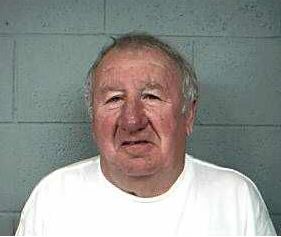
 A 61-year-old Coulterville man was charged in Perry County court earlier this week with first-degree murder.

William Farnsworth faces the charges in the death of Jeffrey Harris.

Farnsworth allegedly shot Harris, 51, with a 12-gauge shotgun Friday on Goldeneye Road in Coulterville.

Harris’ body was found in his car by Perry County Sheriff’s deputies. Farnsworth was reportedly at the scene when authorities arrived.

Bond was set at $5 million for Farnsworth on Monday. If convicted, he could face 25 years to life in prison.

A preliminary hearing has been set for Nov. 21 at 11 a.m. at the Perry County Courthouse in Pinckneyville.

Illinois readies for health insurance enrollment

CHICAGO (AP) — Shopping for health insurance starts all over again Saturday as a second round of enrollment begins under President Barack Obama’s health care law. Last time around in Illinois, more than 217,000 people signed up for coverage with more than three-quarters qualifying for financial assistance based on their incomes.

obamacare

Here’s a link to the story.

Franklin-Williamson ROE expansion work continues

The clock is ticking for Matt Donkin, Regional Superintendent of Schools, who has until next summer to absorb Johnson and Massac counties into the Franklin-Williamson Regional Office of Education #21.

fw

Here’s the link to the story in the Benton Evening News.

Area could see first snow of the season on Saturday

Chilly temperatures and the potential of accumulating snow are in the forecast for Southern Illinois this weekend.

Skies will be sunny Friday with a high of 33, according to the National Weather Service. That’s 23 degrees colder than the usual high temperature of 56 for Nov. 14 in this area.

Overnight the temperature will drop to 20, seven degrees warmer than the all time low for this date, 13, set in 1940.

On Saturday there is a 70 percent chance of snow in the forecast with a high of 34. Accumulation is expected to be about half an inch to an inch, enough to make roads slick and potentially dangerous.

The low will drop to 25 overnight Saturday with a 60 percent chance of snow.

There is a 20 percent chance of snow Sunday when the high will reach 36. The overnight low will be 21.

There is no break from the cold expected anytime soon. The extended forecast calls for a high of 30 for Monday and the mercury will only reach 27 Tuesday.

snow

Read more here: http://www.bnd.com/2014/11/14/3510563_snow-in-the-forecast-this-weekend.html?rh=1#storylink=cpy

Lawmakers want federal site named for Lane Evans

SPRINGFIELD (AP) — A bipartisan effort by Illinois members of Congress is underway to name a federal building for the late U.S. Rep. Lane Evans.

U.S. Sens. Mark Kirk and Dick Durbin and U.S. Rep. Cheri Bustos introduced legislation Thursday to name a Galesburg veterans facility the Lane A. Evans VA Community-Based Outpatient Clinic.

Evans died Nov. 5 at age 63 after battling Parkinson’s disease. The Democrat was known through a 20-year career in the House as a champion of military veterans.

Kirk — a Republican— said Evans’ work for veterans focused on removing the “stigma that surrounds combat-based injury and illness.”

Durbin and Bustos are Democrats.

Evans was from Rock Island and joined the U.S. Marine Corps at age 17. He was elected to Congress in 1982 and served 12 terms.

Former U.S.. Representative Lane Evans passed away on Nov. 5 after a long illness.

Former U.S.. Representative Lane Evans passed away on Nov. 5 after a long illness.

Murder charges filed in Perry County death

 A 61-year-old Coulterville man was charged in Perry County court earlier this week with first-degree murder.

William Farnsworth faces the charges in the death of Jeffrey Harris.

Farnsworth allegedly shot Harris, 51, with a 12-gauge shotgun Friday on Goldeneye Road in Coulterville.

Harris’ body was found in his car by Perry County Sheriff’s deputies. Farnsworth was reportedly at the scene when authorities arrived.

Bond was set at $5 million for Farnsworth on Monday. If convicted, he could face 25 years to life in prison.

A preliminary hearing has been set for Nov. 21 at 11 a.m. at the Perry County Courthouse in Pinckneyville.

William Farnsworth

William Farnsworth

Obituary – Terry L. Rawson – Sesser

SESSER — Terry L Rawson, 57, died Tuesday, Nov. 11, 2014, in Barnes- Jewish Hospital in St Louis.

Terry was born May 29, 1957, in Bonne Terre, Missouri, to Lester and Beulah (Pinkston) Rawson.He married Cindy (Rapp) Rawson on July 26, 1980, and she survives of Sesser.

Terry worked at Continental Tire in Mount Vernon for 26 years and was a member of Harley Davidson Hog Chapter.

He is survived by children, Jason Sales of St. Louis, and Tera Neikes of Sesser; grandchildren, Kelisy Grob, Keegan Neikes, Grace Sales and Hannah Neikes; brothers and sisters, Denny Rawson of Texas, Sharon Cade of Farmington, Missouri, Janet Bobbit of Springfield, Missouri, Connie Hurst of Knoblick, Missouri, Steve Rawson of Farmington, Missouri, Sheila Dickerson of Cadet, Missouri, Mike Rawson of Farmington, Missouri, and Sandy Moyers of Bonne Terre, Missouri.

Terry was preceded in death by his parents.

Funeral services will be at 11 a.m. Friday, Nov. 14, in Brayfield-Gilbert Funeral Home of Sesser, Pastor Ben Durbin. Burial will be in Hammond Cemetery in Sesser. Visitation will be from 5 to 8 p.m. Nov. 13, at the funeral home.

In lieu of flowers, memorials may be made to Motorcycle Riders Memorial of Illinois and will be accepted at the funeral home.

For more information, visit www.gilbertfuneralhomes.com.

Obituary – Delbert Brown – Sesser

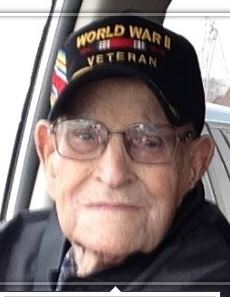
SESSER – Delbert Brown, 91, of Sesser, passed away Nov. 9, 2014 at his home.

delbertDelbert was born June 12, 1923 in Franklin County, IL, the son of Nat Brown and Lettie (Miller) Brown.

He married Alma (Newbury) Brown and she survives in Sesser.

He worked at Old Ben 21 before he retired and also was a farmer.

Delbert was a member of the VFW of Sesser, UMWA, and a member of the First Baptist church of Sesser.  He was a great husband, dad, and grandfather. He was a man of many hobbies he enjoyed woodworking, gardening, coin collecting, and was an avid St. Louis Cardinals fan and an avid Sesser-Valier Sports fan.

He served in the Navy during WWII, and served for 2-1/2 years in the Pacific Ocean on the Minesweeper USS Revenge, and was also on the first ship to enter Tokyo Bay and witnessed the signing of the peace treaty.

He is survived by his children, Linda and husband Terry Miller of Sesser, IL and Darrell and wife Charlotte Brown, of Sesser, IL; grandchildren Richard and wife Selena Miller and Angela and husband John Furlow and Guy Brown; great grandchildren Grady Furlow, Stella Furlow, Cole Furlow; step-great-granddaughter Danielle Stroud and sister-in-law Clara Brown, Sesser, IL.

He was preceded in death by his parents, six brothers and sisters, Lacy Brown, Earl Brown, Violet Kirkpatrick, Leroy Brown, Janeva Lovelady and Ruby Spann.

Funeral services will be held Thursday, Nov. 13, 2014 at 11 a.m. at the First Baptist Church in Sesser, Il with the Rev. Tom Dewitt and Brother Bryant Harris officiating. Visitation will be on Wednesday November 12, 2014 from 5 p.m. until 8 p.m. at the Brayfield-Gilbert Funeral Home in Sesser and on Thursday November 13, 2014 from 10 a.m. until the service time at 11 a.m.

Burial will be at Horse Prairie Cemetery, Sesser IL.

In lieu of flowers donations can be made to the Sesser-Valier Athletic Department or to the Sesser VFW and will be accepted at the funeral home.

Brayfield-Gilbert Funeral Home Sesser IL is in charge of arrangements.

For more information go to www.gilbertfuneralhomes.com


Benton, West Frankfort, Illinois News | Franklin County News