“Team Chemistry” Warrior cagers of 1983-84 take 25-7 record into RLC HOF

by Bob Kelley -retired Sports Information Director, Rend Lake College 
RLC 83-84

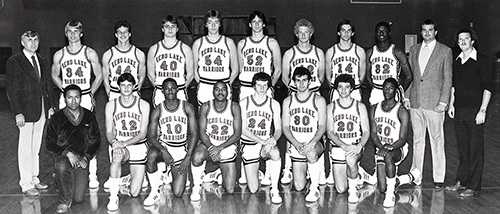
Members of the 1983-84 Rend Lake College Warriors Basketball team should all be decked out in white lab coats when assembled en masse for their induction into the RLC Sports Hall of Fame on Saturday, April 22.

Chemistry was their “thing” back in the day.

Before we go on, let’s make one thing perfectly clear: these players did not lack for talent. In fact, all nine sophomores who grew close together for two years on the Ina campus, plus one late addition, accepted offers to continue their playing careers following their departure from the Juco (Junior College) ranks, the most from one class in 50 seasons of Warrior basketball.

And to be honest, we are not really sure how many, if any, of the guys ever wore a white lab coat… or even took a Chemistry class.

What we can tell you: all had to go to class often enough to graduate before moving on, even though they could be observed spending every minute of their free time, or so it seemed, in the gymnasium. They liked playing the game. And it appeared as if they liked each other as much as any athletic group could.

Maybe the closeness started with something as simple as the offer of a fried bologna sandwich to anyone who took Travis Helm up on his offer to visit his tiny hometown of Orchardville in the northeast sector of the district. Or maybe it was the opposites-attract bond that quickly grew between teammates Tim Wills, the homegrown local kid, and city-slicker Robby Jones, one of the many transplanted Hoosiers, and spread throughout.

Perhaps it could be attributed to one of the individuals, who shall remain anonymous, willing to be harassed by his classmates more than the rest, for the good of the team.

Truth be told, they liked each other. They spent a lot of time together. They devoted long hours mastering their trade, challenging one another to get better. They accepted coaching. They took care of business by doing their jobs and sharing the ball.

Team Chemistry. It worked like a charm.

Nine team records were theirs when they left town. A 10th belonged to nine of those same players as freshmen.

No individual records. Enough said?

Mitch Haskins coached a team-record 22 wins out of this close-knit group their first campaign and a 25-7 mark the next, his third at the helm. Eight of their 20 losses in two seasons were to teams which advanced to the National Junior College Athletic Association (NJCAA) National Finals in Hutchinson, Kan. Their three conference setbacks in 1983-84 were by a total of five points.

In addition to the standard for wins and winning percentage (.781), the 1983-84 Hall-of-Fame Gang established new marks for consecutive wins (nine); free throws made (587), attempted (790) and percentage (.743); greatest average point differential per game (16.0); greatest margin of victory (74 vs. Earle C. Clements Job Corps Center, 108-34), and greatest margin of victory over community college opponent (57 vs. Oakton, 97-40).

An equally impressive average defensive yield of 63.3 points per game was just 1.0 higher than the record set by their 1982-83 predecessors.

Perhaps the most amazing feats to the credit of Haskins & Co. were 83-81 and 84-82 losses, both in overtime, to a dominating Wabash Valley College (WVC) squad which boasted eventual NCAA (National Collegiate Athletic Association) Division I signees in 6-foot-9, 230-pound Dan Bingenheimer (Missouri), 6’ 9” Brian Helm (Cincinnati) and even seldom-used 6’ 7” Quinn Wirth (Wyoming), plus 6’ 2” Andre Jackson (Southern Indiana).

Warrior strongman Jim Price (Cloverdale, Ind.), a 6’ 4 ½” forward, was the lone player to average double-figures at 16.3 points per game (ppg) and also led with 6.5 rebounds per game (rpg). He was rewarded with his selection to the eight-man All-Region XXIX Team (second-leading vote-getter behind Bingenheimer), First-Team All-Great Rivers Athletic Conference (GRAC) and Warrior Most Valuable Player as voted by his playing partners. He was joined the next two seasons at D-II Indiana Central University by another RLC insider, 6’ 5” Jamie Raley (Leitchfield, Ky.), named “Most Improved” after posting 8.8 ppg and 4.8 rpg.

Heady 6-foot playmaker Wills started all 67 games during his Juco career, a feat made even more noteworthy by his ridiculous average of 32:30 per game. Think Coach Haskins wanted Wills on the floor directing his team?

Wills was rewarded with All-GRAC First Team status, a berth in the All-Region XXIV All-Star Game and “Most Dedicated” nod by his peers. He doled out 263 assists (8.2 per game), nearly five times more than his closest rivals, averaged 6.4 points and made 82.5 percent of his free throws (80-97), which ranked No. 2 to Jeff Cochren and his .849 accuracy (79-93). Wills scored at a 9.8 ppg clip (second) as a freshman but concentrated on making everyone around him better as a sophomore, when his turnover rate was just under three per game.

Helm was the outside sniper; no telling what his total might have been had the 3-point arc been introduced four years earlier. The 6’ 2 ½” Helm (Wayne City legend with 2,003 points playing as a senior for RLC Sports HOF Inductee Jerry Wilson) and the 6’ 3” Cochren (Huntingburg, Ind.) each produced 9.8 ppg. Little known fact: the Warriors were 30-5 in games in which the unflappable Helm was in the starting lineup (7-1 late as a freshman).

Orchardville’s own capped his Juco career as the second-leading scorer for the winning East quintet in the Region XXIV All-Star Game prior to the repeat Region Tournament championship title claimed by WVC. Helm had 12 while playing alongside Price and Wills one last time.

Cochren put up 22 in the second loss to WVC; in year one, he led the team in scoring eight times and had a six-game stretch in which he averaged 16.3 ppg and hit 50-77 field goals (9-10 vs. Kaskaskia). Both he and Wills were All-Tournament in the Lincoln Land Holiday Classic as freshmen.

“Frog” Jones (Evansville, Ind.), a gifted, 6’ 2” all-around threat who earned his moniker thanks to his leaping ability, was Second Team All-GRAC as a freshman, made the six-man All-Region Tournament Team and was voted MVP by his teammates. He averaged 9.8 ppg then, scoring one less point than Wills, a team-high 6.1 rebounds and second-best 2.1 assists; he was the RLC leader 18 games in rebounding, half that many in scoring. But he played only the final 19 games as a sophomore for academic reasons. His minutes and individual stats suffered after rejoining a team that adjusted to playing without him the first 11 games.

The late-season development of 6’ 8” center Barry Wright (Newburgh, Ind.) the previous season had a great deal to do with the Warriors setting the school record for most wins at 22, capturing a first Sectional crown and placing third in the Region XXIV Tournament. Wright had 17 points and 10 rebounds in the second WVC game as a first-year collegian and had 11 rebounds in both wins over Belleville Area, including the Sectional Championship triumph. He led the team both seasons in blocked shots, with a total of 47, and pulled down 14 rebounds in the record rout of Oakton.

Point guard Dean Merder (Jasper, Ind.), 6’ 3”, was a steadying influence off the bench for 63 games during his career, never more so than when he hit six three throws in the final 2:06 and had 10 points overall in a 60-51 win over Southern Baptist (Ark.) five games into his Juco career.

One of the four tallest players to play for RLC at 6’ 9”, Jeff Wilkinson (Princeton, Ind.), played sparingly but enjoyed one shining moment in a 14-rebound, 13-point effort in the record romp versus the Kentucky Job Corps Center.

Sophomore transfers Todd Stoermer (Rockport, Ind.) and Mark Kerley (Benton), both 6’ 5”, added much more than just depth. Stoermer was one of three players who started all 32 games, averaging 8.0 ppg, 3.8 rpg and 1.6 apg. Kerley led the team in scoring twice, with 18 and 16, and on the boards twice.

And the freshman class was headed by 6’ 5” swingman Kevin Riggan (Mt. Vernon) and 6’ 1” guard Fred Taylor (East St. Louis), as well as 6’ 4” Derrick Leonard (St. Louis, Mo.), 5’ 10” William Watts (Madison) and 6’ 4” redshirt Garrett Miller (NewBern, N.C.). Riggan led RLC with 14 against the Job Corps.

Price, with 20 points or more in seven games and 10 or more rebounds in seven, was the Warrior leader in 19 and 18 games, respectively. Helm, who hit .580 from the field with the majority coming from outside, was the top scorer in five contests; Cochren and Raley were No. 1 in three each, Kerley twice, Wills and Riggan once. Other rebound pacesetters were Raley (five games, including 13 vs. the St. Louis Boys Club), Wright and Stoermer (four each), Jones and Kerley (twice) and Cochren and Wilkinson (once).

How good were these Warriors offensively? As a team, they connected on 50 percent or more of their field-goal attempts in 21 games, with three others at 49 percent. The Warriors topped the century mark five times and had 90 or more in four other games.

From the charity stripe, they were even better. Cochren and Wills ranked 1-2 in Region XXIV, and Helm was not far behind at 81.0 percent. Price, battling inside, had far more chances than anyone else and made 75.9 percent, with 26 in succession over a five-game stretch, seven shy of the team record.

Defensively, the HOF-bound crew held 11 opponents under 60 points. Only four times did teams score as many as 80 points against RLC, and the two overtime setbacks to Wabash Valley accounted for half of those; Haskins & Friends won the other two such games. The Warriors held 17 foes to 45 percent shooting or under from the field, four others under 50 percent

Included in the record-nine-game winning streak was an unprecedented third Land of Lincoln Holiday Classic Championship in Springfield, at which Price shared “Most Valuable Big Man” honors following his career-high 31-point effort in the finale and Cochren was a member of the seven-member All-Tourney Team for the second year in a row.

A 102-60 rout of Concordia Seminary at home to end the month of January also produced Haskins’ 400th career coaching win in the high school and college ranks.

RLC was runner-up to undefeated WVC in the second year of the GRAC thanks to two-game sweeps of John A. Logan, 80-57 and 73-57, and Southeastern Illinois, 82-69 and 79-70, and a split with Kaskaskia.

In addition to being a valued part of this season of accomplishments, Assistant Coach Chuck Doty could boast of his distinction for helping Warrior quintets claim two conference championships. He was a freshman reserve when the 1976-77 quintet shared the Southern Illinois College Conference title under HOF Coach Jim Waugh. (He was 18-for-19 as a sophomore from the charity stripe.) In 1981-82, the first season with Haskins in charge and Doty at his side, the Warriors tied the school record with 21 wins and captured a share of the final SICC championship before it gave way to the GRAC.

There were very few “downers” during the record-setting campaign. Even though the veteran cast, coming off a 22-13 freshman showing, was not expecting to get off to a 2-3 start, it is not difficult to explain. Two losses were to perennial powerhouse Three Rivers (Mo.), the 1979 NJCAA National Champion at 37-3; the Raiders also finished third in 1978, fifth in 1980 and seventh in 1981 despite a 39-2 slate. The two-time conquerors would go on to finish 38-3 (seventh) in 1983-84.

The record was a less-than-impressive 6-4 after the Warriors went on the road and lost at Kaskaskia, 65-64, but even then it took an incredible performance to beat them. The Blue Devils literally shot the lights out the first half, sinking 18 of 24 attempts (75 percent), for a 41-27 advantage. A real power outage extended halftime to one hour and 40 minutes, before the hosts escaped with the win thanks to 70 percent sniping overall (28-40).

Wabash Valley would be the only other regular-season foe to defeat Rend Lake College. And this was half of a two-year WVC dynamo which would advance both seasons to the NJCAA Finals in Hutchinson, Kan., run roughshod over the fledgling GRAC and finish 32-6 and 31-7; five wins over RLC stretched a winning streak to 13 games in head-to-head competition.

Unfortunately, the Hall of Fame inductees may have been looking forward too much to a third encounter with their nemesis. A 25-6 season ended in a thud: a shocking 59-51 loss to Southeastern Illinois in the Section IV Tournament opener, with the losers finding the range at a paltry 40 percent clip. The upset victims went 6:30 without scoring midway through the second half, then made just one field goal in the final 2:49.

No individual records, granted. Individual recognition, yes. All nine two-year contributors, along with Stoermer, were signed or played at the four-year level, a single-class record for Warrior cagers before and since.

Price and Raley put their Hoosier-Kentucky rivalry backgrounds behind them for two more seasons as teammates at Indiana Central University. Merder and Cochren returned to their Southern Indiana roots to play for Haskins’ alma mater, Oakland City (Ind.) College. Wright accepted an athletic grant-in-aid to play for University of Wisconsin-Green Bay, and Wilkinson did likewise at Union College (Ky.). Jones originally stuck with Cochren and Merder at Olney Central before finishing his career at Indiana State-Evansville. Wills and Helm both accepted offers from Freed-Hardeman College but their stay in Tennessee was very brief, with Wills finishing his career as a two-year starter and Academic All-America for Southern Illinois University Edwardsville.

Stoermer used his unique Juco career as a combo WVC/RLC Warrior as a springboard to University of Indiana Southeast. The next season after their graduation from RLC, Riggan was a starter at guard for defending NCAA Division II National Champion Jacksonville (Ala.) State University and Taylor was one of the leading 3-point shooters in the country as a junior  for NAIA contender McKendree College and an All-America candidate as a senior.
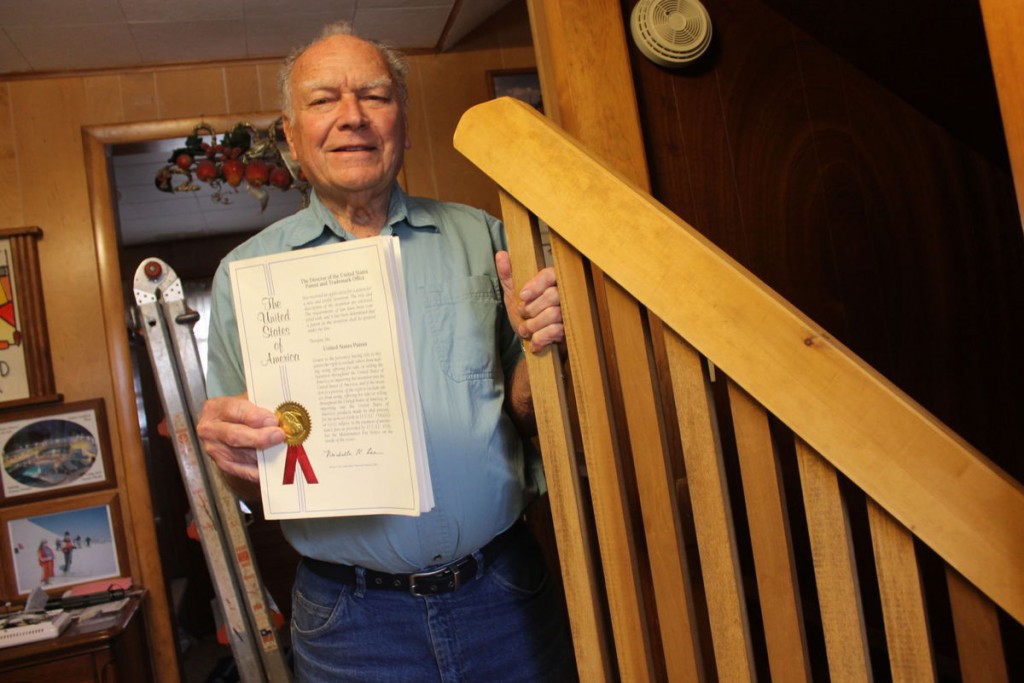
West Frankfort Man Granted Patent for New Gate Design

Swofford, with his new patented stairway design. (William McPherson - West Frankfort Gazette)

Swofford, with his new patented gate design. (William McPherson – West Frankfort Gazette)

WEST FRANKFORT, IL (William McPherson- The West Frankfort Gazette. Please click to read the full article. Here is an excerpt) Robert Swafford, of West Frankfort, has been granted a patent for his ‘Step-Store’ gate, which he invented at his home—which he also built by hand. The gate is designed for stairway doors (going up) and features a unique swiveling pivot design that allows the gate to swing vertically and be stored easily on the wall for convenience—it also serves as a makeshift handrail when in the stored position. The gate, constructed of two horizontal beams which are pivotally connected by vertical beams connected to a special hinge designed by Swafford which allows the gate to pivot vertically when opened or closed.

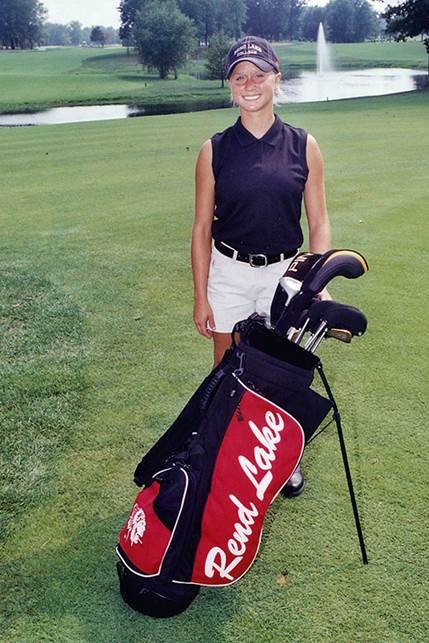
RLC Sports Hall of Fame inductee: golfer Ace Kaufman, Third-Team All-America/Region Medalist, headed to RLC Hall

by Bob Kelley, retired Sports Information Director, Rend Lake College 

INA, IL – Danielle Kaufman would have every right, it would seem, to wonder just how good she might have been while competing on two healthy legs during her time as a member of the Rend Lake College Women’s Golf Team from 2003-05.

But there really is no need for that.

The Nashville product, despite dealing with severe leg issues, was one of the best to ever play for the Lady Warriors; witness her inclusion in a small Class of 2017 to be inducted April 22 into the RLC Sports Hall of Fame.

A “Goose” (Kaufman), “Soup” (the obvious, Campbell) and Team Chemistry all packaged into one neat bundle and Hall-of-Fame-bound. Game time on Saturday, April 22 for the 18th Induction Ceremonies will be 5:30 p.m. in James “Hummer” Waugh Gymnasium.

Results from Kaufman’s freshman season would not reflect a player who had to overcome the course she was playing, her opponents and Compartment Syndrome.

She helped set Lady Warrior 18- and 36-hole records with a 320-316–636 as her team placed ninth against 22 four-year opponents in the Illinois Wesleyan Invitational at Ironwood Golf Club in Normal, placed 30 spots ahead of her nearest teammate in 16th at the 17-team Ball State University Classic and finished 18th individually with her 86 in the nine-team Western Illinois University Classic leading up to the 2003 Region XXIV Tournament.

All she did in the main event each fall to determine spring NJCAA finalists was lead the Region XXIV Tournament field. Kaufman’s 163 (81-82) was five better than the runner-up, South African teammate Mia van Rooyen at 168 (87-81), and eight ahead of the 171 (87-84) by third-place teammate Carrie Paul, who was All-Tournament as a freshman in the NJCAA Finals.

The Region XXIV Medalist, Third-Team All-America honoree and only the second player (at the time) to record a hole-in-one in the National Junior College Athletic Association (NJCAA) Championships will be saluted along with former Warrior Baseball Coach Rich Campbell (1992-2001), who did something no other diamond mentor has done in 50 years by guiding his charges to two Region titles; and the record-setting 1983-84 Men’s Basketball Team, which left behind nine new standards following a 25-7 campaign. (RLC Media Services)

The Region XXIV Medalist, Third-Team All-America honoree and only the second player (at the time) to record a hole-in-one in the National Junior College Athletic Association (NJCAA) Championships will be saluted along with former Warrior Baseball Coach Rich Campbell (1992-2001), who did something no other diamond mentor has done in 50 years by guiding his charges to two Region titles; and the record-setting 1983-84 Men’s Basketball Team, which left behind nine new standards following a 25-7 campaign. (RLC Media Services)

The 1-2-3 sweep enabled Coach Cindy Corn’s squad to claim its first crown in three years by 36 strokes over defending champ John A. Logan with rounds of 683 (339-344) at Franklin County Country Club.

In the spring, Kaufman was medalist and classmate Casey Biddinger was runner-up as the RLC gals warmed up for Nationals by winning the McKendree College Invitational. Biddinger heated up even more in St. Croix, Virgin Islands, as part of one of the most unique threesomes in the history of golf; after her two partners aced the same hole, Biddinger joined the crowd with a hole-in-one of her own later in the round.

Just for good measure during the season, Kaufman played from the Gold Tees (5,922 yards) and set the Rend Lake Golf Course Women’s Record at 68.

Halifax Plantation Golf Club in Ormond Beach, FL, welcomed the 2004 NJCAA Championships, and Rend Lake College welcomed the stiff competition.

Least of those intimidated was the freshman “Goose,” whose 328 (84-79-84-81) scorecard was tied for 12th-best tied and included the ace on day two at the 131-yard No. 13 hole. Third-Team All-America honors also went to van Rooyen, who was one back at 329 (85-79-85-80), and all five Lady Warriors crashed the Top 25 – Ashley Hemann, 19th, at 333 (85-83-80-85); Paul, 21st, at 335 (87-86-78-84), and Biddinger, 24th, at 336 (80-87-85-84).

Rend Lake College claimed fifth overall – the first of six such finishes during an eight-year stretch – and was never behind winner Daytona Beach (Fla.) by more than 10 strokes any round with its four-player totals of 1,317 (334-327-327-329). Also ahead of the Illinois reps were Tyler (Tex.) Jr. College, 1,296; Redlands C.C. (Okla.), 1,302; and 2002 Champ McLennan C.C. (Tex.), 1,307.

Off-season surgery followed. Kaufman did not have to ride in a cart her sophomore season, but Corn will tell you the former three-sport standout still suffered somewhat by the condition and is still bothered by it to this day.

Compartment Syndrome (C.S.) occurs when excessive pressure builds up inside an enclosed muscle space in the body. It can impede the flow of blood to and from affected tissues. Acute C.S. usually is the result of a major event, such as a broken leg, whereas Chronic C.S. may be caused by regular, vigorous exercise.

The American Academy of Orthopaedic Surgeons refers to it as “a painful condition that occurs when pressure within the muscle builds to dangerous levels” as well as “very rare.” It reports fewer than 20,000 cases per year in the U.S. Compartments consist of a group of muscles, nerves and blood vessels in the arms and legs covered by a tough membrane which does not stretch or expand easily.

“It is most often caused by athletic exertion,” according to the AAOS OrthoInfo, and “usually relieved by discontinuation of the exercise.”

Corn appealed to the NJCAA for an exception to be made which would allow Kaufman to compete while using a golf cart. Corn cited the case of Casey Martin, who was successful in his suit a couple of years earlier against the Professional Golfers Association; Martin, a former teammate of Tiger Woods at Stanford University, had lived with a congenital circulatory disorder since birth, Klippel-Trénaunay-Webber Syndrome, and received permission to utilize a cart under the Americans With Disabilities Act.

(Martin helped his Stanford team win a National Collegiate Athletic Association Division I National Championship in 1994 and in 2016 was Head Coach of the NCAA D-I National Champion Oregon Ducks.)

Kaufman, Hemann, Biddinger and Nicole Adams were joined for their sophomore season by another South African, Freshman Surita Risseeuw, and Freshman Meredith Mosel.

Kaufman set the pace for her RLC mates with a 156 (75-81) at the Ball State University Classic. The 2004-05 contingent then tied the previous team’s 36-hole mark at Illinois Wesleyan before establishing new lows for both 18- and 36-holes by repeating at the Spring McKendree Invite; their 632 (319-313) was 30 shots better than the nearest opponent.

More records fell in the Region XXIV showdown. Risseeuw was two better than defending champion Kaufman and her 159 (80-79) – two under her winning score from the year before – and the team bettered the Region record by 17 shots and won by 46 with its 645 (324-321).

The “Goose” could not duplicate her All-America status this go-around, but a tie for 20th is not too shabby. Her scorecard: 335 (81-84-87-83).

Teammates were not too shabby, either. Risseeuw was Second-Team All-America in name only. Her 312 (77-74-80-81) tied for fifth, yet she was awarded sixth-place by a scorecard playoff. Hemann was All-Tournament in 18th following a quick recovery at 333 (91-81-81-80); Adams tied her more heralded teammate for 20th at 335 (87-76-86-86); and Biddinger was 30th with 349 (95-86-86-82).

The four low rounds each day count toward a team’s total; i.e., all five players contributed a minimum of two of their rounds to a No. 4 showing – the program’s best ever – at 1,310 (336-315-333-326). Two-time defending champ Daytona Beach was No. 1 at 1,249; ahead of McLennan at 1,282; and Redlands at 1,289.

Corn, Kaufman & Co., also known as the 2004-05 Women’s Golf Team, was voted into the RLC Sports Hall of Fame in 2014 as the program’s first to be so recognized. Kaufman is the third individual female golfer in the Hall, following Second-Team All-American Elizabeth Kasey (1999-2001) in 2008 and two-time Region XXIV Medalist Bobbie Jo Bivens (1999-2001) in 2014.

Kaufman, Hemann and Biddinger formed a recruiting coup for Southern Illinois University Edwardsville for the 2005-06 campaign; however, Kaufman broke up the trio by finishing her career at Southern Illinois University Carbondale.

She is enrolled in the Professional Golf Association’s Apprentice and Teaching Professional program. She was a Golf/Teaching Pro for Indian Ridge Golf Club in Oxford, Ohio, when she was hired in March 2014 as the Women’s Coach at Indiana University East.

In between, she returned to familiar territory as a Lady Warrior Assistant Coach in Golf for three seasons from 2009-12 and in Softball under Coach Dave Ellingsworth the last two (2015-17).

50 Infulencers of Rend Lake College: Wayne Arnold The Mainstay

Reece Rutland- RLC Media Services 

INA, IL – Mainstay might be a bit of an understatement for the next of the 50 influencers. There aren’t many who could tell you their first-hand account of the Rend Lake College groundbreaking or transferring classes from Mt. Vernon to the new campus, but come to a home basketball game, and I’m sure Wayne Arnold would be happy to oblige.

Arnold, a Bonnie native, graduated from Goode-Barren Township High School (now Sesser-Valier High School) in 1950 and is a longtime resident of Mt. Vernon.

Wayne Arnold (RLC Media Services)

Wayne Arnold (RLC Media Services)

After serving in the U.S. Air Force for four years he returned to the area. He earned an associate’s degree from Centralia Junior College — now Kaskaskia College — and went to Southern Illinois University at Carbondale to earn bachelor’s and master’s degrees in physical education. He later earned a master’s degree in recreation and outdoor education from SIU-C.

Following college, Arnold got his start by coaching and teaching at Dahlgren High School — now Hamilton County Senior High School — for three years before accepting a health and driver’s education teaching position at Mt. Vernon Township High School.

The long time Mt. Vernon resident stayed there for a year when in 1963 he went to Mt. Vernon Community College where he helped develop the school’s P.E. program and taught hygiene in its science program. He has never left.

Like several of his colleagues at MVCC, Arnold made the transition from MVCC to RLC when that change occurred on July 1, 1967, and served professionally with the college for 22 years. For the past 26 years (and still counting) following his retirement he has remained active on campus, volunteering with several athletic, service and wellness projects.

In addition to being a decorated member of the Rend Lake College faculty and a seasoned coach for a bevy of Warrior programs, Arnold might be best known as the father of the Fitness Center and the RLC Sports Hall of Fame.

For those contributions, he was granted a place in campus immortality by being inducted into the Hall of Fame with the Class of 2008. During the fall of 1995, the fitness center attached to the newly-christened James E. “Hummer” Waugh was officially named the Wayne Arnold Aerobics Super-Circuit Fitness Center.

He headed the Sports Hall of Fame Steering Committee of seven individuals in the summer of 1999 to establish the constitution and by-laws of the group, which were approved by the Board of Trustees in the fall of 1999. The first class was selected and inducted in the spring of 2000.

RLC File photo

RLC File photo

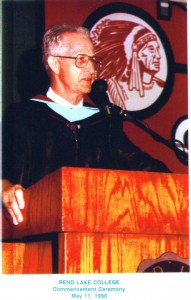
Arnold also had his share of successes in the classroom. During his tenure, he served as Health, Physical Education and Recreation Instructor; as well as Department Chair. Speaking of tenure, he was in the first group of faculty members to receive that honor in 1968. The 1980 Student Senate also gave him the “Teacher of the Year” award. He was also the keynote speaker at the 23rd Annual Commencement Ceremony on May 11, 1990.

But, the accolades didn’t stop there. He was recognized May 1982 with the Faculty Service Award. And, during the 1988-89 school year, the Rend Lake College Foundation presented him with the Faculty Excellence Award. At the state level, he was honored by the Illinois Community College Trustees Association in June of 1989 for his contributions and commitment to quality education.

On the diamond and hardwood, Arnold served as head coach of the men’s basketball team at Mt. Vernon Community College from 1963 to 65, and then served as assistant coach under Hummer from 1969 to 71.

He is credited with establishing the MVCC Baseball Program in 1963, serving as head coach for two seasons. He also had a one-season stint and the RLC assistant baseball coach during the 1970-71 season.

Not content with just starting the baseball program, Arnold also launched the RLC Men’s Tennis team in 1975-76 and acted as the head coach that season. He was also: Assistant Coach Women’s Basketball 1990-91, 1991-92, 1992-93, 1993-94, and 1994-95 and Assistant Coach Softball 1991-92, 1992-93, 1993-94, 1994-95, 1995-96, 1996-97, 1997-98, and 1998-99.
Please click on the link to watch an interview conducted with Wayne Arnold a couple of days ago.
https://www.youtube.com/watch?v=AmUrZDT5y20


Saying goodbye to an old blue suitcase

By Jim Muir

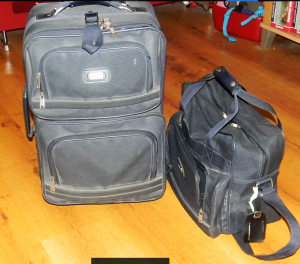
As I walked down the sidewalk at WQRL on Saturday morning, carrying an old blue suitcase and a small satchel, I realized this was the last few steps of a 25-year journey.

suitcase

You see, the suitcase and satchel contained my radio equipment and I was turning it in, leaving it behind. And while the equipment belongs to WQRL, for the past quarter century it has been ‘my equipment.’ I babied it, took care of it, and took great pains to keep it working properly. Not one time in 25 years did I ever leave it in my truck overnight, not once. Even if I arrived home at midnight from a Friday night game and I was heading out at 6:30 a.m. to do my Saturday show, I carried my equipment in the house and carried it right back outside a few hours later.

And those that have worked with me through the years know that I was more than a little particular about the way the equipment was packed and unpacked. My theory was simple: ‘if I put everything back in the exact (and I mean exact) same place then the next ballgame I will know exactly where it’s at.’ During the past 25 years I have packed and unpacked that suitcase and satchel for more than 3,000 ballgames and 1,200 Saturday morning shows. In short, there’s more than a little mileage on the suitcase, satchel and me!

As I took a quick picture and one last look at the old, worn out suitcase and satchel I thought of how many miles we had traveled together. At venues from Peoria to Cairo and Quincy to Mt. Carmel, I’ve dragged that suitcase and satchel behind me. And without exception every one of those miles was traveled with excitement, anticipation and enthusiasm.

When I turned to walk away, I thought to myself, ‘if I had a dollar for every mile I traveled with that old blue suitcase I would be a rich man.’ But, then I quickly realized I am a far richer man because of the friendships I’ve made and the relationships I’ve forged while dragging that old blue suitcase around. It’s been a wonderful journey where I had the privilege to tell the story about thousands of athletes that gave all they had, every ounce of effort and talent that was in them for nothing more than pride in their school and community. What a blessed man I have been to witness that!

It’s an interesting and unique feeling of ‘knowing that you know’ when it’s time to walk away … because I am completely at peace with my decision. Through the years I watched people in many different professions stay too long, and then leave on bad terms. I think there is much to be said about walking away from something that has been a huge part of your life on your terms and with no regrets.

As I turned and parted company with my old suitcase and satchel I said a prayer for those that follow me. A prayer for God’s blessings, safe travels, exciting ballgames and that same joy and enthusiasm that I found in doing something that I absolutely loved.

Oh … one last thing – I prayed they take care of the equipment! That old suitcase has a lot more miles left in it!

Remembering Tom Butler

WPSD TVPADUCAH, KY (Todd Faukner and Mike Spissinger WPSD TV. Please click on the link and watch several videos about the legendary news man Tom Butler. Here is an excerpt ( Longtime WPSD-TV anchor and journalist Tom Butler died Friday, March 31, 2017. Family and friends are remembering the man you welcomed into your home for decades as a loving father, grandfather and devoted Christian. Butler’s family said he passed away from complications after a 2015 fall. As members of the WPSD Local 6 team mourn his loss, we also honor his lasting impression on journalism, our news station, and the Local 6 region. Butler’s 35 year career at WPSD began in 1962 as an announcer and reporter. During his time as a young reporter, he sometimes played the role of weathercaster, and ultimately developed into a journalism titan.)

‘Wild Bill’ documentary spotlights Franklin County icon

Still shot to the introduction to the Wild Bill documentary. (Ethan Talley photo)

Still shot to the introduction to the Wild Bill documentary. (Ethan Talley photo)

WEST FRANKFORT (K. Janis Esch- The Southern. Please Click to read the whole article. Here is an excerpt.) Chicago-based filmmakers Ethan Talley and Zach Xanders returned to their native Southern Illinois to discover the person behind a local legend. The poignant little film clocks in at just over 15 minutes, following William Reinschmidt, an iconic figure in Franklin County, on his daily adventures through Benton, West Frankfort, Herrin, Sesser and his hometown of Orient. “Wild Bill” was released last week on Vimeo, an online video streaming platform. It has been accepted to the Shawnee Shorts Midwestern Film Festival, and it will screen April 15 at the Liberty Theater in Murphysboro.

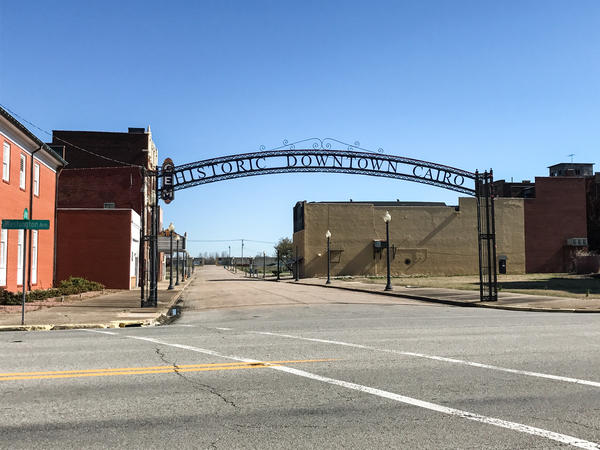
Tired Of Promises, A Struggling Small Town Wants Problems Solved

Cairo has lost more than half of its population in recent decades. Today, there are just under 3,000 people left. (WSIU photo)

Cairo has lost more than half of its population in recent decades. Today, there are just under 3,000 people left. (WSIU photo)

CAIRO, IL (Kirk Siegler – WISU Radio. Please click on the link for the full story, accompanying audio, and picture gallery. Here is an excerpt.) At the very southernmost tip of Illinois, the pancake flat cornfields give way to the rolling, forested hills of the Delta. Here, at the windy confluence of the Mississippi and Ohio rivers, it feels more southern than Midwest when you arrive at the old river port and factory town of Cairo, once made famous in Mark Twain’s The Adventures of Huckleberry Finn. But Twain might not recognize Cairo today. “People come through Cairo and say ‘wow,’ ” says Phillip Matthews, a pastor and community activist. In the past three decades, his hometown lost half its population. Alexander County is not only the poorest county in Illinois; it’s also one of the fastest depopulating counties in the United States. In Cairo, weeds creep up through the cracks in the old brick streets. Whole city blocks are condemned. “I’ve watched for 40 years this city decline,” Matthews says, on a recent tour.

50 Infulencers of Rend Lake College: Dr. Harry Braun, stabilizing force

Reece Rutland – Rend Lake College Media Services

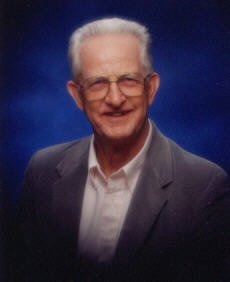
Dr. Harry J. Braun, a native of St. Louis, was the youngest president in RLC’s history, selected to helm the ship in 1978 at the age of 37. He is also the second-longest serving president with 11 years in the presidency.

Former Rend Lake College President, Dr. Harry Braun

Former Rend Lake College President, Dr. Harry Braun

Braun (pronounced Brown) came into RLC at a tumultuous time. H.J. Haberaecker had been serving as interim president following the early exit of Martin after tensions between the president’s office and faculty reached a boiling point causing a parting of ways between the college and its second president.

Haberaecker was credited as being extremely effective at stabilizing the campus in his 4.5 months in the interim role, but it was up to Braun to rebuild many of the fractured relationships.

Braun was chosen from a field of 94 applicants. He took office in July of 1978 and spent his first year calming the radical waters, installing a new administrative team and making sure quality education of students remained the college’s primary goal.

Cooperation with business and industry likewise became a college trademark during the 11-year Braun era, as evidenced by Rend Lake College’s prestigious national award as one of three recipients of the first Media Systems Business-College Partnership Awards recognizing “exemplary cooperation” with business and industry through creative responses to productivity needs.

Rend Lake College took center stage at the 62nd Annual Convention of the American Association of Community and Junior Colleges (AACJC) in St. Louis in April 1982. The college was cited for its work with two area coal companies, Old Ben and Inland Steel. That same year, 1981-82, RLC was cited for its “forward-thinking posture” in a very positive evaluation which resulted in a seven-year accreditation from the North Central Association of Colleges and Schools.

Among other accomplishments, Braun also is credited with rejuvenating the RLC Foundation, established in name only at the time the college was first started, in 1979.

“Our efforts this past year have focused upon providing quality programs aimed at helping people. Whether it is through programs which prepare students for vocations, programs which prepare students for transfer to senior institutions, programs to help individuals develop areas of personal interest or programs to help students achieve a high school equivalency certificate, quality is the underlying principle we strive for at Rend Lake College,” stated Braun in his address to the RLC Board of Trustees following his first year in office.

“…let me point out that when I visited the area as a candidate for the Presidency of Rend Lake College and spent time discussing the college, the community and the future, I discovered a very enthusiastic supportive group of people committed to Rend Lake College and what it could provide the area. After having been here a year, I find that support and interest exist on an even greater scale than I first imagined. It is truly a privilege to be among the fine people of Southern Illinois.”

Under Braun, things boomed. In his 1982 Annual Report, the third president reported that enrollment had climbed to record highs and in the course of a single year, the college had added 36 course offerings, a Nursing Program expansion, classes were offered via television and videotape in public libraries, the Math Lab was initiated and off-campus classes were launched in Waltonville, Tamaroa and Bonnie, bringing RLC to 14 off-campus locations.

The following year found the college in a situation we would recognize today, a difficult economic atmosphere. Financial woes were compounded by enrollment finally leveling off after years of rapid growth. But, Braun showed why those that hired him call him “the right man at the right time.”

“Our mission remains unchallenged: A commitment to excellence in all that we strive to do at Rend Lake College. Meeting the needs of the district we serve has always been our No. 1 priority and will remain so. Every decision, every action is guided by that desire and commitment for excellence,” he expressed in an impassioned address to the board of trustees.

“Our students never seem to let us down. They are, of course, our prized products, the best representatives any institution of higher learning could have.”

That positive attitude and focus paid off, allowing the college to weather the storm and bounce right back with the quality service and education that carved out a name for RLC.

Braun was able to celebrate a RLC milestone birthday too, the 20-year celebration in 1987. It was at the Annual RLCF Dinner that he offered the following thoughts:

“No progress is ever achieved without direction and leadership. Direction was provided by the Steering/ Planning Committee, the original Board of Trustees. Leadership was, in turn, provided by Founding President Dr. James M. Snyder and the original faculty and staff. The result was a low-cost, community-based college was established in this area of Southern Illinois and that vision is as valid today as it was 20 years ago. It will always be this vision that insures the college will remain an integral part of Southern Illinois for many years to come. Our heartfelt thanks to all who worked so hard to make Rend Lake College a reality and the success that it is today.”

At his resignation on Feb. 28, 1989, the board of directors voted to accept the resignation “with great reluctance.”

Dr. (Richard) Simpson made a motion to accept Braun’s resignation effective February 28, 1989. Mr. (David) Hurley seconded the motion. On roll call vote, all voted “Yes.” Dr. (Kirby) Browning stated he felt Dr. Braun’s tenure at the college had been good for the institution and the college and community could be proud of what had been accomplished.

Dr. Simpson stated that Braun came to the college as President at a very difficult time in 1978 and that he had been the right man at the right time. He said he had enjoyed working with Braun. Mr. (Everett) Thompson said he endorsed Dr. Simpson’s statement and it had been a pleasure to work with Braun. Dr. Patton said Braun was leaving with one of the best records in Southern Illinois and he appreciated very much his contributions to the college.Braun2W

For his part, Braun stated a person can develop a love for a place and a love for a community and that was how he felt; however, he felt accepting the Danville Area presidency was a good opportunity. He thanked the Board for its support for 10 1/2 years. He indicated his appreciation of each Board member and the Deans.

“This has been a tremendous place to be the past 11 years,” he commented. “The quality of our faculty and staff is super, and the support I have had from our Board has been tremendous. I have really appreciated the support and guidance I have received from the Board members. There is a good relationship that exists between our Board and staff. Over the years, we have been able to achieve one accomplishment after another.”

“I have nothing but the best to say about Rend Lake College and about the City of Mt. Vernon and the other communities within the college district,” he added. “We will take with us a lot of fond memories. This is where our children prospered. They received the educational background and opportunities that will enable them to succeed in later life.”

Prior to coming to RLC, Braun had served as Dean at Central Arizona College in Coolidge, Ariz., since 1976. He received a Bachelor’s Degree in Sociology from Southwest Missouri State College in 1963, a Master’s Degree in Educational Administration from the University of Missouri in 1966 and a Doctorate in Educational Administration from Missouri in 1971.

As a student at Southwest Missouri College, Braun lettered in football for four years. He traveled extensively in the United States and abroad in such places as Jamaica, Luxembourg, Austria, Germany and Switzerland. He enjoyed photography, model railroading and physical exercise. Braun was a member of the Rotary International Board of Directors in 1977 and served as President of the Congregation at Trinity Lutheran Church in Casa Grande from 1976-77.

South Carolina was never supposed to get this far, and neither was Frank Martin

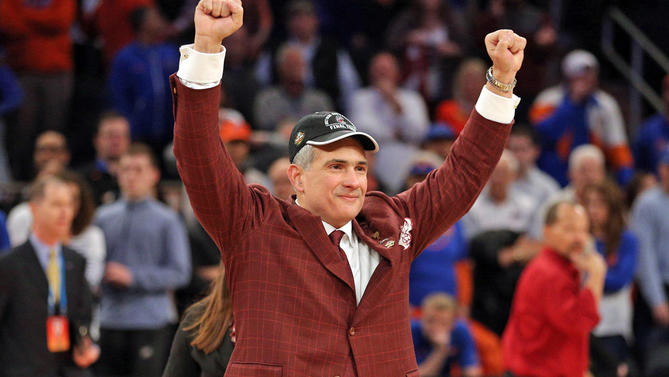
South Carolina coach Frank Martin is a South Carolina legend, and fastly becoming a household name nationwide.  (USA Today photo.)

South Carolina coach Frank Martin is a South Carolina legend, and fastly becoming a household name nationwide. (USA Today photo.)

NEW YORK, NY (Matt Norlander-CBS sports. Please click on link to read the full story and accompanying videos. Here is an excerpt) Too often, we attach Cinderella sports stories to teams, not people. Ironic, given the origin story of the metaphor at hand. Francisco Jose Martin, a child of Cuban exiles, now a man at 51 years of age and having accomplished the implausible by bringing the University of South Carolina to its first Final Four, is a tale never before seen in college basketball. A coach mostly known for his scowl and howl has a story miles deeper than the outward persona that overtakes him every time he steps onto the sideline. “We all have our paths, there is no A B to C, but Frank’s story is a pretty fascinating one,” Ole Miss coach Andy Kennedy said. “He wasn’t a great athlete, didn’t have a ready-made path or a family member or whatever in the profession. His path was one of grinding and working.”

Benton, West Frankfort, Illinois News | Franklin County News