Royalton High School “Pirates”

http://www.illinoishsglorydays.com/id381.html
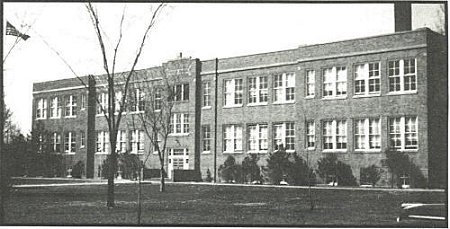
Royalton High School building in the early 1960’s

ROYALTON, IL  (Illinois High School Glory Days.  Please Click on the link above for the full story.  Here is an excerpt below.)

Royalton (population 1,130) is located in far southern Illinois about 12 miles southeast of DuQuoin. In its “hey day” in the early 1900s Royalton enjoyed a population of over 3,800!  Illinois Route 149 is the main roadway to and from this southwestern Franklin County town.  The town’s area was settled in the mid 1850s but it was not recognized as an official Illinois town until 1907.  the Missouri Pacific Railroad runs to the southeast of town.  A branch of the Big Muddy River flows through the south side of Royalton.  For some EXCELLENT history and facts about Royalton and its former High School please visit the town’s official website at:
A school was established in Royalton by the late 1800s.  Royalton High School served the town as, at first, a three year school, and later earning a four year high school status.  The original school building was found unsafe in 1936.  A new building was quickly constructed and ready for use in 1937.  This is the building you see pictured above.  Royalton High continued to be the pride and joy of Royalton residents until the early 1960s.  It was then that dwindling enrollment led to a consolidation effort with its neighbor four miles to the northeast, Zeigler.  This effort became a reality in 1962 with the creation of the Zeigler-Royalton School District.
 

Speaker of Record: The man behind the fiscal fiasco in Illinois

http://www.reuters.com/investigates/special-report/usa-illinois-madigan/

SPRINGFIELD, IL –  (Dave McKinney, Reuters News Service.)

NOTE:  This is a very long piece about Mike Madigan.  It gives a lot of the history of his life.  It is a very good read.  Here is the introduction below.

Hundreds of politicians share blame for drowning the state’s government in billions of dollars of debt and unfunded pension liabilities. But House Speaker Michael Madigan – a dominant political force for three decades – has been the constant in key decisions that created the mess.


Macedonia High School

http://www.illinoishsglorydays.com/id691.html

MACEDONIA, IL –  (Illinois High School Glory Days.  Click the link above for the full story. Here is an excerpt below.)

Macedonia (population 51) is located on the Hamilton-Franklin County line, midway between McLeansboro and Benton.  Modern-day Macedonia consists of the crossroads of two county roads, with one “loop” street, known as Benton Street.  The 2000 census states that there were 17 households remaining in Macedonia.  The Big Muddy River runs one mile to the north of the village.

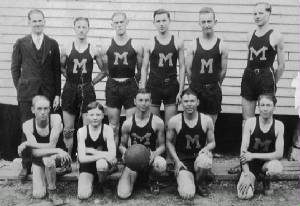
The 1930-31 Macedonia basketball team. The mascot is unknown. (Photo submitted to Illinois High School glory days by Dennis Downey)

Macedonia had a 3-year high school from 1928 to 1936.  Under the rules of the time, any elementary district which was not included in an established high school district could operate a high school of 3 years or less, and draw state elementary funds to pay for at least part of the program.  Many small rural villages, particularly in the southern half of the state,  took advantage of this. 

A number of laws were changed in 1940’s, resulting in the virtual elimination of 2 and 3-year high schools by 1948.  In Macedonia, most of the high school classes were held in the IOOF Hall on Benton Street.  It is not known if this building is still standing.  A nearby blacksmith shop was also converted for use as a gymnasium.  A total of 194 students attended Macedonia High during it’s short existence.  Macedonia maintained a grade school until 1946, when it and 10 other rural districts consolidated into the old Ewing College facility nearby.

This Restaurant In Illinois Doesn’t Look Like Much – But The Food Is Amazing

http://www.onlyinyourstate.com/illinois/restaurant-bistro-il/

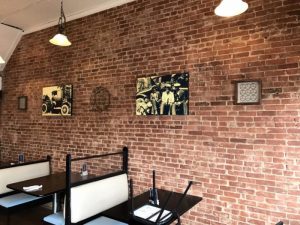
The interior of Seasoning Bistro. (Only in Your State photo)

BENTON, IL – (Elizabeth Crozier, Only in Your State.  Please click on the link for the story.  There is a lot of pictures.   Here is an excerpt.)

As Midwesterners, we know the best places to get a bite to eat aren’t always as fancy looking as the Ritz, and oftentimes, the best food comes out of restaurants you’d never expect. We’ve found an Illinois treasure that is more than meets the eye, and it serves upscale dishes in a modern atmosphere.

Benton is a small town of about 7,000 people located between Mount Vernon and Marion. It is full of museums and parks.

The menu of original dishes includes burgers, steaks, seafood, salads, and so much more.

Meals are made with fresh ingredients that support local farmers and which are designed to be healthier than fast food fare.


Logan (Hannaford) High School Rams

http://www.illinoishsglorydays.com/id592.html

LOGAN, IL  (Illinois High School Glory Days.  Please click on the ling above for the full story.  Here is an excerpt below.)

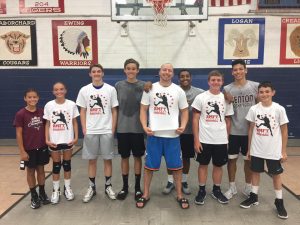
The Logan Grade School gym in 2016. The gym is used for AAU games at times. Center is Dave Brown who recently coached at Carterville High school. This picture was grabbed from long time Logan Grade school coach, and now AAU coach Bobby Melvin’s Facebook page.

Hannaford (population 55) is located in far south-central Illinois in the southeast portion of Franklin County.  County Road 20 is the mnain roadway through Hannaford as Illinois Route 34 passes by the northeast side of town.  The website of www.mapquest.com lists a small hamlet of Logan on the northeast side of Hannaford too.  We are told that Hannaford is also known as Logan and at one time was called Smothersville.  The 2000 Illinois Census only lists the town of Hannaford however.  The population of 55 is disputed as well, there may be about 200 actual residents of Hannaford.

The history of the Logan School in Hannaford is in need of research.  We do know that K – 8 classes were held at the school at one time.  If high school classes were offered, we believe it was probably no more than a two-year high school.  We are in need of your assistance to verify any of this information. 
Logan Grade School competed in the Little 6 Conference.  Different schools were members of the conference over the years, but they included Akin, Ewing-Northern, Thompsonville, Creal Springs, Crab Orchard, Galatia, Pickneyville District 204.  ,Mulkeytown and Hurst-Bush Grade Schools were also members of the conference at one time..

The science behind the eclipse

From The National Oceanic and Atmospheric Administration (NOAA)

Before the eclipse, that will bring thousands to Southern Illinois, I will be sharing several news stories and articles about it.  The first is explaining some information about eclipses in general – Steve

What is an eclipse?

A solar eclipse over Indonesia in March, 2016. (AP file photo)

An eclipse occurs when the Sun, Earth, and Moon move into alignment with each other. One of the bodies blocks the view of another and creates a shadow. There are 2 different types of eclipses: solar and lunar. A lunar eclipse happens at nighttime and occurs when the Earth passes between the Sun and the Moon creating a shadow on the Moon. These types of eclipses occur roughly 2 to 4 times per year. A lunar eclipse will generally last for a few hours.

What To Expect

On Monday, August 21, 2017, all of North America will be treated to an eclipse of the sun. Anyone within the path of totality can see one of nature’s most awe inspiring sights – a total solar eclipse. This path, where the moon will completely cover the sun and the sun’s tenuous atmosphere – the corona – can be seen, will stretch from Salem, Oregon to Charleston, South Carolina. Observers outside this path will still see a partial solar eclipse where the moon covers part of the sun’s disk.

One of the biggest shows of the summer won’t require a ticket. However, the rare total solar eclipse crossing the country on August 21, from Oregon to South Carolina, must contend with the bane of sun seekers: the potential for cloudy weather.

We found that the coasts could be susceptible to cloudier conditions and that increased cloud cover may be possible as the eclipse travels across the country east of the Mississippi RiverHistorically speaking, cloudiness may factor into each location’s chance for a good viewing. NOAA’s NCEI and the Cooperative Institutes for Climate and Satellites–North Carolina (CICS-NC) reviewed past cloud conditions for August 21. We found that the coasts could be susceptible to cloudier conditions and that increased cloud cover may be possible as the eclipse travels across the country east of the Mississippi River.

One of the biggest shows of the summer won’t require a ticket. However, the rare total solar eclipse crossing the country on August 21, from Oregon to South Carolina, must contend with the bane of sun seekers: the potential for cloudy weather.

We found that the coasts could be susceptible to cloudier conditions and that increased cloud cover may be possible as the eclipse travels across the country east of the Mississippi RiverHistorically speaking, cloudiness may factor into each location’s chance for a good viewing. NOAA’s NCEI and the Cooperative Institutes for Climate and Satellites–North Carolina (CICS-NC) reviewed past cloud conditions for August 21. We found that the coasts could be susceptible to cloudier conditions and that increased cloud cover may be possible as the eclipse travels across the country east of the Mississippi River.

One of the biggest shows of the summer won’t require a ticket.  However, the rare total solar eclipse crossing the country on August 21, from Oregon to South Carolina, must contend with the bane of sun seekers: the potential for cloudy weather.

Historically speaking, cloudiness may factor into each location’s chance for a good viewing. NOAA’s NCEI and the Cooperative Institutes for Climate and Satellites–North Carolina (CICS-NC) reviewed past cloud conditions for August 21. We found that the coasts could be susceptible to cloudier conditions and that increased cloud cover may be possible as the eclipse travels across the country east of the Mississippi River

We found that the coasts could be susceptible to cloudier conditions and that increased cloud cover may be possible as the eclipse travels across the country east of the Mississippi River

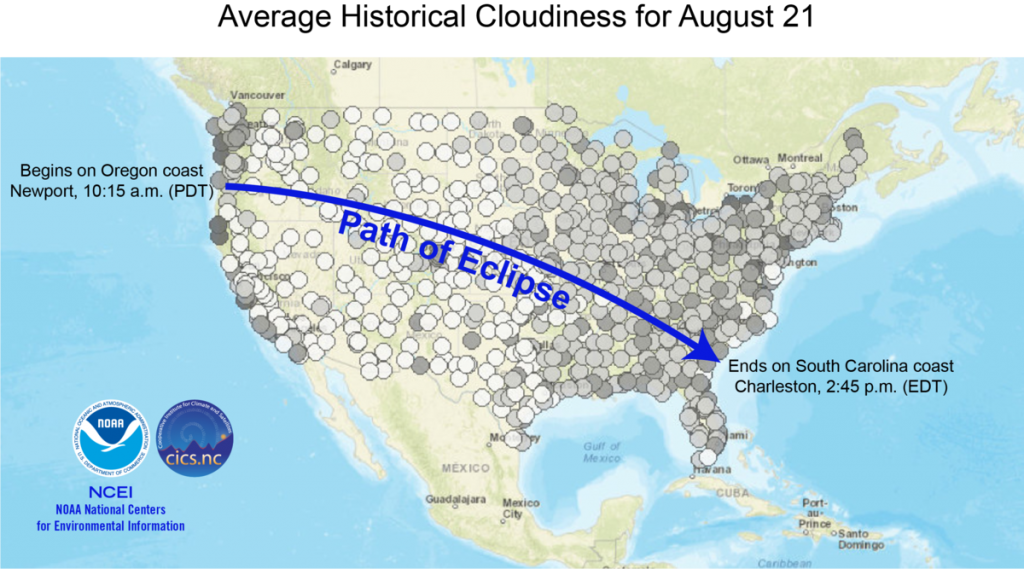
The darker the dot, the greater the chance for cloudiness at the hour of peak viewing during the total solar eclipse on August 21, 2017. Dots represent automated weather stations that reported the cloudiness data and show the 10-year cloudiness average for August 21, 2001–2010. Map developed by CICS-NC in cooperation with NOAA NCEI, Deborah Riddle. Notice that over this time, Southern Illinois has the least chance of cloudiness.

Although the picture doesn’t particularly bode well at the coasts of Oregon and South Carolina, the chance for clearer skies appears greatest across the Intermountain West. If historical conditions hold true, Rexburg, Idaho, a two-hour drive west of Wyoming’s Grand Teton National Park, has a good chance for clearer skies. Casper, Wyoming, also holds promise. Other historically clear locations include Lincoln, Nebraska, and Carbondale, Illinois.

Historical cloudiness increases as the path curves southeastward across the Plains, making viewing the rare event potentially rarer as it moves toward the East Coast. This is the first time since 1979 that a total eclipse has crossed the United States and the first time since 1918 that one will travel coast to coast. Everyone in the 50 states will be able to experience at least a partial eclipse, depending on weather, but no other country falls in the path of the total eclipse.

Try Our Interactive Eclipse Map

Our interactive map provides greater detail about viewing the eclipse across the nation. The map lists a “viewable” percentage for each reporting location. The viewable percentage represents the likelihood of skies being clear enough for the eclipse to be visible. A higher percentage means a viewer is more likely to have a view unobstructed by clouds. Also, a bar chart shows the probabilities for five types of cloud cover: clear (no clouds), few, scattered, broken, and overcast. Percentages are derived from averages of each type of cloud cover.

Only an estimated 12 million people live within the relatively narrow area of the total eclipse. (NOAA map)

Take Newport, Oregon, for instance, the first land-based weather station location in the path of the full eclipse. The eclipse will occur there at approximately 10:15 a.m. local time (17:15 UTC). The viewable percentage is 44 percent, meaning there’s a 56 percent chance that viewability will be adversely affected by clouds. Keep in mind the percentage is an estimate of average conditions, not a guarantee for this year.

Only an estimated 12 million people live within the relatively narrow area of the total eclipse. However, several major cities and five state capitals fall within the path of totality—the narrow band where the moon completely blocks the sun’s face. Visit the CICS-NC interactive map (link is external) to search for an optimal viewing location by zip code.

Find a Seat for the Total Eclipse

From its first appearance over the Pacific Northwest in midmorning, the eclipse will last approximately 90 minutes, ending shortly after 2:45 p.m. local time (18:45 UTC) on the South Carolina coast near Charleston. Here’s a partial list of towns and cities on the path of totality from west to east along with estimated local times for peak viewing of the total eclipse, followed by the average historical cloudiness percentage (state capitals in bold; asterisks indicate larger airports):

Illinois Carbondale 1:19 p.m. (CDT) 80%
Kentucky Paducah 1:22 p.m. (CDT) 77%


Chesterfield near St. Louis 1:16 p.m. (CDT) 61%


Eclipse Essential: Protect Your Eyes

The eclipse should only be viewed with protective eyewear designated for use during an eclipse. Ordinary sunglasses or 3D glasses lack sufficient protection.  It’s important to take precautions when viewing the eclipse. The partial phases of the eclipse can last between 2 to 3 hours; at its longest, the total eclipse will last 2 minutes and 40 seconds.

Direct viewing of the partial phases can cause permanent damage to your eyes because of the intensity of the sunlight. The eclipse should only be viewed with protective eyewear designated for use during an eclipse. Ordinary sunglasses or 3D glasses lack sufficient protection. Also, avoid viewing through unfiltered cameras, telescopes, binoculars, or other optical devices.

However, if weather cooperates during the few minutes that the sun is completely eclipsed in totality, the brief interval is as safe to view as a full moon.

Safety Precautions

Looking directly at the Sun is unsafe except during the brief total phase of a solar eclipse (totality), when the Moon entirely blocks the Sun’s bright face, which will happen only within the narrow path of totality.

The only safe way to look directly at the uneclipsed or partially eclipsed Sun is through special-purpose solar filters, such as eclipse glasses or hand-held solar viewers. Homemade filters or ordinary sunglasses, even very dark ones, are not safe for looking at the Sun. To date four manufacturers have certified that their eclipse glasses and handheld solar viewers meet the ISO 12312-2 international standard for such products: Rainbow Symphony, American Paper Optics, Thousand Oaks Optical, and TSE 17.

Always inspect your solar filter before use; if scratched or damaged, discard it. Read and follow any instructions printed on or packaged with the filter. Always supervise children using solar filters.


  • Stand still and cover your eyes with your eclipse glasses or solar viewer before looking up at the bright Sun. After glancing at the Sun, turn away and remove your filter — do not remove it while looking at the Sun.
  • Do not look at the uneclipsed or partially eclipsed Sun through an unfiltered camera, telescope, binoculars, or other optical device. Similarly, do not look at the Sun through a camera, a telescope, binoculars, or any other optical device while using your eclipse glasses or hand-held solar viewer — the concentrated solar rays will damage the filter and enter your eye(s), causing serious injury. Seek expert advice from an astronomer before using a solar filter with a camera, a telescope, binoculars, or any other optical device.
  • If you are within the path of totality, remove your solar filter only when the Moon completely covers the Sun’s bright face and it suddenly gets quite dark. Experience totality, then, as soon as the bright Sun begins to reappear, replace your solar viewer to glance at the remaining partial phases.


An alternative method for safe viewing of the partially eclipsed Sun is pinhole projection. For example, cross the outstretched, slightly open fingers of one hand over the outstretched, slightly open fingers of the other. With your back to the Sun, look at your hands’ shadow on the ground. The little spaces between your fingers will project a grid of small images on the ground, showing the Sun as a crescent during the partial phases of the eclipse.

A solar eclipse is one of nature’s grandest spectacles. By following these simple rules, you can safely enjoy the view and be rewarded with memories to last a lifetime.

Understanding the Historical Cloudiness Data

Our historical cloudiness data come from 10-year hourly climate normals for 2001–2010 measured at automated weather stations across the country on August 21, as close to the hour of the eclipse as possible. Availability of data determined the number of usable stations. The period 2001–2010 was chosen because a nationwide network of automated observing stations became operational in 1998. This 10-year timeframe allowed hourly normals computation for more than 800 stations.

However, many factors can influence cloudiness. Areas that experience higher humidity, such as coastal Oregon and the Southeast, are more likely to experience cloudy conditions. Other local factors may influence cloudiness and viewability as well, such as mountains and fog. Afternoon convection can also cause pop-up showers and storms. This helps explain the lower viewable percentages over the eastern half of the United States when the eclipse passes through early to midafternoon.

Keep a few other caveats in mind as you look at our maps. Automated weather stations only view clouds from the surface to 12,000 feet. Larger airports also typically have two cloud sensors (ceilometers) whereas smaller airports may only have one. Larger airports often have human observers that can see higher clouds. These differences mean that stations at larger airports tend to detect more clouds, so stations near each other may report different viewability percentages.

Ultimately, the cloudiness calculations are based on past observations, which are no guarantee of future outcomesUltimately, the cloudiness calculations are based on past observations, which are no guarantee of future outcomes. For predictions of actual conditions closer to the day of the eclipse, check your location’s forecast at NOAA’s Weather.gov as early as seven days prior to the event.

As Brady Phillips of NOAA’s Office of Communications notes, “Even the driest places on Earth experience clouds, fog, and rain.


50 INFLUENCERS OF REND LAKE COLLEGE: MILLIE CALDWELL, MATRIARCH OF GENEROSITY

by Reece Rutland- Rend Lake College Public Information/Sports Information Director

INA, IL – Three decades of service. Three decades of unselfish giving. Verna Mildred “Millie” Caldwell has enthusiastically supported Rend Lake College and its students for a length and breadth that is nearly unparalleled in an already distinguished lineup of supporters.

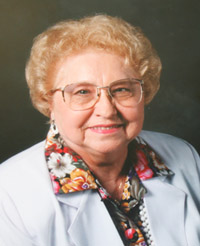
Millie Caldwell – (All pictures provided by Rend Lake College

Caldwell and her husband Clifton were already community staples outside of their involvement with RLC. For years, the couple operated one of the area’s most successful newspapers, The Christopher Progress. In fact, the Caldwells purchased the two Southern Illinois papers in 1974 (the Progress and the Herrin Spokesman) and ran them for over a decade, eventually selling them in 1987 to the American Publishing Company newspaper chain.

Cliff passed away on Feb. 29, 2004. He was a well-known journalist for 46 years and a member of the Southern Illinois University Editors Hall of Fame. Together, Clif and Millie instituted zoned editions of their weeklies that provided published local news for the communities of Sesser, Zeigler, Royalton, Johnston City and Carterville, as well as the communities included in their names. They had been married for 61 years.

To commemorate Cliff’s legacy, the family banded together to create the Clifton Caldwell Endowment Scholarship for Rend Lake students. The scholarship looks to help a Journalism or Math major in need.

The Foundation was the natural fit; Millie had spent the better part of three decades doing everything she could to aid the RLCF and the students of RLC.

Caldwell has represented the Christopher locality on the RLCF Board since 1982 when she elected at 4th Annual Meeting to bring the board to nine members. She had been an integral part of three capital campaigns. She was a major part of the RLCF Children’s Center campaign and the RLC Music Program Addition and Theatre Renovation. All of that on top of the fact that she has donated toward RLCF scholarships for years.

But, it was never just money either. Both Millie and Cliff gave of their time. The Caldwells actively attended RLCF events throughout the years. He was a frequent player at annual RLCF Golf Tournaments and they regularly attended the RLCF Annual Dinner together. Millie was also frequently at the RLCF Women’s Luncheon and RLCF Scholarship Dinner.

In 2002, Millie was recognized by the Rend Lake College Foundation Board of Directors when the group enthusiastically and unanimously approved her for Emeritus status.

She earned it. Her support of the college through Foundation efforts is, without a doubt, significant. And her length of service to the organization is nearly unmatched. Only three other members hold Emeritus status on the board – Charter Director Howard L. Payne and former Rend Lake College President Mark S. Kern and long-time foundation board member and Sesser businessman George Slankard.

“This honor is reserved for members because of longevity and lasting contributions made to the RLC Foundation,” explained Pat Kern, RLCF consultant and former CEO.

“This status welcomes these selected Board members to the RLCF meetings at any time they wish to attend.”

It’s not the first honor Millie has received for her service.

She also earned the coveted RLCF Presidential Award in 2006. It’s an achievement set aside specifically for RLCF Board members who have displayed exceptional service.

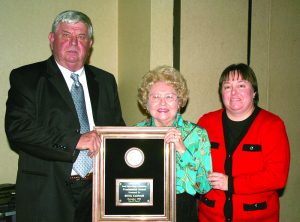
Millie Caldwell (center) accepts the Presidential Award from then RLC President Mark Kern (left). She was joined by her daughter, and RLC Professor Cindy Caldwell (right).

For her numerous scholarship contributions, she has also been presented the RLCF Bronze Seal Award, an achievement also shared by her daughter Cindy.

In fact, the Math component of the Clifton Caldwell Endowment Scholarship stems from Cindy’s willingness to pick up her family’s legacy and continue the giving tradition. She is a Mathematics Professor who joined the Rend Lake College faculty in 2000. She also is a graduate of Rend Lake College (Class of 1980) who worked on the RLC Times student newspaper. The Caldwells also had three sons – Denis, Dave and Douglas.

“Like many of our influencers, Millie and the Caldwell family display a selflessness that has helped the institution become what it is today. We are able to do the things we do thanks to the generosity of people like Millie, people who care about the district’s students and want to see them succeed,” said RLC President Terry Wilkerson.


July 2nd, 1980 Derecho that hit Franklin County

by Steve Dunford

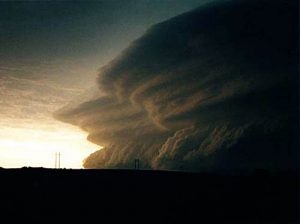
The cloud signature of a formation of a Derecho in Oklahoma in 2011. (Storm Prediction Center photo.)

NOTE:  I wrote this piece for a blog that I used to have called Steve’s Ramblings in 2013.   It was only one of the few things in a Google search that came up for this storm.  Next year, I will do some microfilm research of the Benton Evening News, West Frankfort Daily American, The Southern Illinoisan, and Marion Daily Republican.

On June 29 1980 Southern Illinois was hit with a derecho with high winds.  I am writing this from memory because I was only 10 at the time.  I believe that Jackson County was the hardest hit.  WCIL lost their tower in the storm.  I remembered they did not go to full power for a long time.

In Thompsonville, we were without power until the next Monday morning.   This was the beginning of miner’s vacation.  The economy in Franklin County was built around the coal mines at the time.  The UMWA always had a scheduled shutdown around the Fourth of July.

The June 29 wave hit about 11 pm that evening.  Our neighbor at the time Gene Lager lived in the house that Gary Fravel lives in now.  B.G. and Cindy Dial lived there for years.  This was on Main Street in Thompsonville.

Mr. Lager had cattle.  The cattle tried jumping the fence.  It was the same action they did during the Thompsonville tornado on April 27, 1971.  My dad remembered this and had us get in the hallway of our house.  There were trees uprooted and no phone service or power.

My dad was also the pastor of Rescue Free Will Baptist church at the time.  Up in the Whittington/Ewing area, the damage was not as bad. We spent the afternoon with Tom and Jane Harmon and Paul and Cathy Lingle.

We went to Nashville the next morning for a couple of days.   We went to Opryland on July 1, and it was unbearably hot and humid.  The temp was around 100 with high humidity. The motel swimming pool was the highlight of the trip even though it was hot.

We pondered on staying at Kentucky Lake a day or two on the way home.  We stopped and ate at Kentucky Fried Chicken in Calvert City.  People began talking about how bad the weather was supposed to get in there.  We decided we better head back to Franklin County.  At the truck stop, we filled up at on the way home, the thermometer was showing 107 outside.  This is where the Pilot and Arby’s is now.  At the time this was the KFC and the truck stop were the only two establishments right off of I-24 there.

Going up Interstate 24, W3D began what they called their weather watch back in those days.  They always played music in the background that sound like doomsday was coming.  I remember that Randolph County was under a Tornado Warning.  This was during the days that Tornado Warnings were not issued very often.

They began continuous weather coverage with Tom Redicas (sp?) Dutch Doelitz, and I believe Jay Pearce and Steve Land.  The sky had a terrible look to it, and we stayed ahead of the storm.   Pulling in our driveway, Franklin County was put under a severe thunderstorm warning.  The power went off half way while the garage door was closing. We had to shut it manually.

Within ten minutes round two hit.  That was July 2, 1980 around 4:30 pm.  We were huddled in the hallway of our house with a guy that was on a motorcycle heading to Pittsburgh.  The house was cracking and popping.  Trees were being uprooted.  Marion was also taking a big impact.  I remember the NWS (don’t know if it was Cairo or St. Louis then) upgraded all the Severe Thunderstorm Warnings to Tornado Warnings.

There were several unconfirmed sightings of Tornadoes throughout Southern Illinois.   I remember suggesting we start praying.  All at once we hear some explicatives on W3D that was not FCC material.  The tower came crashing down in the middle of the station and silence was heard.

There were straight line winds of 80-100 mph that lasted 45 minutes.  We were without power and phone service for several days.  The following days did not bring any relief from the heat.   The Thompsonville festival was postponed.   We went and checked on my maternal grandparents and my relatives that lived north of Akin.  It took a while getting there dodging trees.  Damage was severe, but they did not take the brunt of the storm like we did.

My paternal grandpa Charles, was an EMT with the old Thompsonville Ambulance Service.  They had a cabin out at West Frankfort Lake at the time.  After getting home from Akin, I rode out at the lake with him.  He was on standby to go to West Frankfort for mutual aid.  There were some injuries there.

He kept hearing reports on his radio how bad Zeigler was as well.    There was crappie that was on the ground everywhere.  We picked up the ones that were alive and he took them home and cleaned them.  There was parts of two five gallon buckets full.

After he made sure the cabin was ok, we went to Zeigler to check on my uncle Chuck and his family.  There were check points at the city limits of both West Frankfort and Zeigler.  They let him go through because he was an EMT.

I remember there were businesses with blown out windows on Main Street.  The Farm Fresh sign was out in the road.  They were building the shopping center at the time.  K-Mart was nearly completed.  There was still enough daylight left to see the twisted steel of Kroger, in which they recently started construction on.

The six mile stretch on Route 149 between West Frankfort and Zeigler was a long one, dodging downed trees and power lines.  My uncle and his family had some damage, but was OK.

I remember that ice was being distributed at the Thompsonville Fire Department.  We had a big feast on the fourth, trying to salvage what we could of a cow that was in the freezer, the crappie, and fixed homemade ice cream with a old style crank freezer.

We also stopped at a fireworks tent in Tennessee on the way home from Nashville, and shot off what we purchased.   It was strange as it was total darkness with no street lights, etc.

Jackson, Williamson, Southern Franklin, Saline and Southern Hamilton County had extensive damage. (The same areas impacted by the May 2008 storm) There were trees uprooted, homes lost roofs and windows.   There was not one television antenna standing.

In fact, the only local station that was able to broadcast was WQRX (now WQRL) at the time.  They were operating on emergency power, and I remember Jake Seymour was the outlet of information that we had.

I would like to get any information on this storm possible for next year.  Feel free to share any pictures etc.

RLC’s historic reunion for all alumni August 12

The Class of RLC Reunion is from 5-9 pm on August 12. RSVP Now

by Nathan Wheeler – Director of Marketing, Rend Lake College

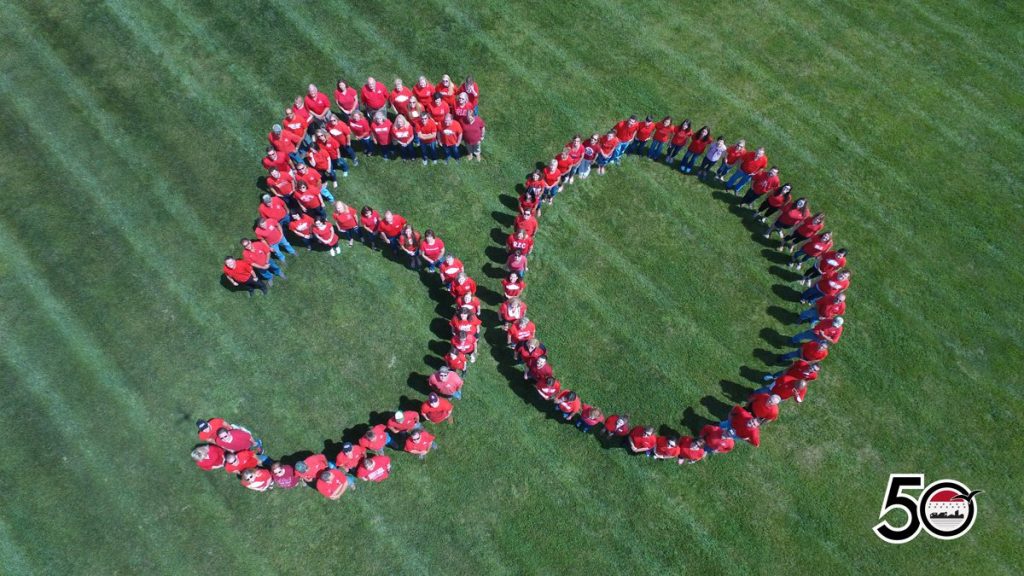
INA, IL  Rend Lake College has produced Warriors for 50 years. There are Warriors who have gone on to work in fields and hospitals, and everywhere in between. There are Warriors who lead and make a difference locally and nation-wide. All are part of a family that’s now five decades strong and still growing.

In honor of RLC’s 50th Anniversary, the college is holding the “Class of RLC Reunion” for Warriors near and far to come to campus and celebrate. Part birthday party, part reunion — the event will feature live music, food, activities and a chance to socialize and be on campus together again.

It will be held from 5 – 9 p.m. Saturday, Aug. 12 on the campus in Ina. Guests can RSVP online at www.rlc.edu/50.

The festivities will kick off with a few key speakers — graduates of the first and 50th classes, along with RLC President Terry Wilkerson.

“The 50th Anniversary is a historic milestone for our college,” Wilkerson said. “It’s a big deal and we want to put on a big event. What better way than to get five decades of alumni and friends together? We hope the RLC family finds its way back to campus for a great evening.”

Live performances by local musicians will begin at 6 p.m. and continue throughout the evening. Local acts include Chris Slone and The Gollihers. Organizers are looking for a blues or jazz band to complete the lineup. Inquiries can be made by calling 618-437-5321, Ext. 1344.

A dinner of cheeseburgers, nachos, hot dogs and other fare favorites will be available. The college’s 50th Anniversary collector’s cup will be included with dinner. Attendees will also have the opportunity to sign a guest book and leave a message for a time capsule that will be buried next year.

Help RLC celebrate and come wish the college a happy birthday, see changes at the campus, reminisce with old friends and make new ones.

For more information visit: www.rlc.edu/50 or call the college at 618-437-5321.

Rangers to the Rescue!

http://www.bentongazette.com/news/rangers-to-the-rescue/article_2c95dd98-5c7d-11e7-b7c2-c3d34b78cc37.html

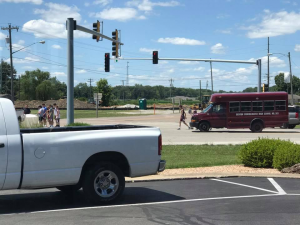
The Benton Rangers boys basketball team helps load up a water tank that fell off of a pickup truck at an intersection in Greenville. (Photo provided to the Benton Gazette)

GREENVILLE, IL – (Benton Gazette.  Please Click on the link above for the full story.  Here is an excerpt below.)

Holly Smith, a resident of Greenville, Illinois, a town approximately 86 miles to our north, has turned in a very uplifting report regarding the kindness and character of our Benton Ranger Varsity Basketball Team.

The boys are currently in the midst of their summer ball schedule, and stopped along the way to help distressed motorist


Benton, West Frankfort, Illinois News | Franklin County News